
designer | editor | illustrator (they/them)


I'm a Brooklyn-born, Philly-made graphic designer and illustrator with a passion for physical craft. I prefer to feature my own handmade creative assets in my design work, instead of relying on external artists or stock footage to deliver my ideas effectively.

In-house work for the center of public
transportation in Philadelphia County.

learning modules
videography | editing
digital assets

print | publication
grid systems | editing

"Tie Your Kimono Outfit Together":
a book about kimono history,
accessories, and patterns.

A commercial package design and
brand guidelines for a set of
techwear-inspired baby toys.

packaging | brand
guidelines | copywriting

mockup | infographics
environmental design

A museum exhibit celebrating Sailor Jerry
and the story behind American tattoo styles.

A logo design project with a focus on
collateral application and cohesive color.

logo | branding
animated collateral
print | digital
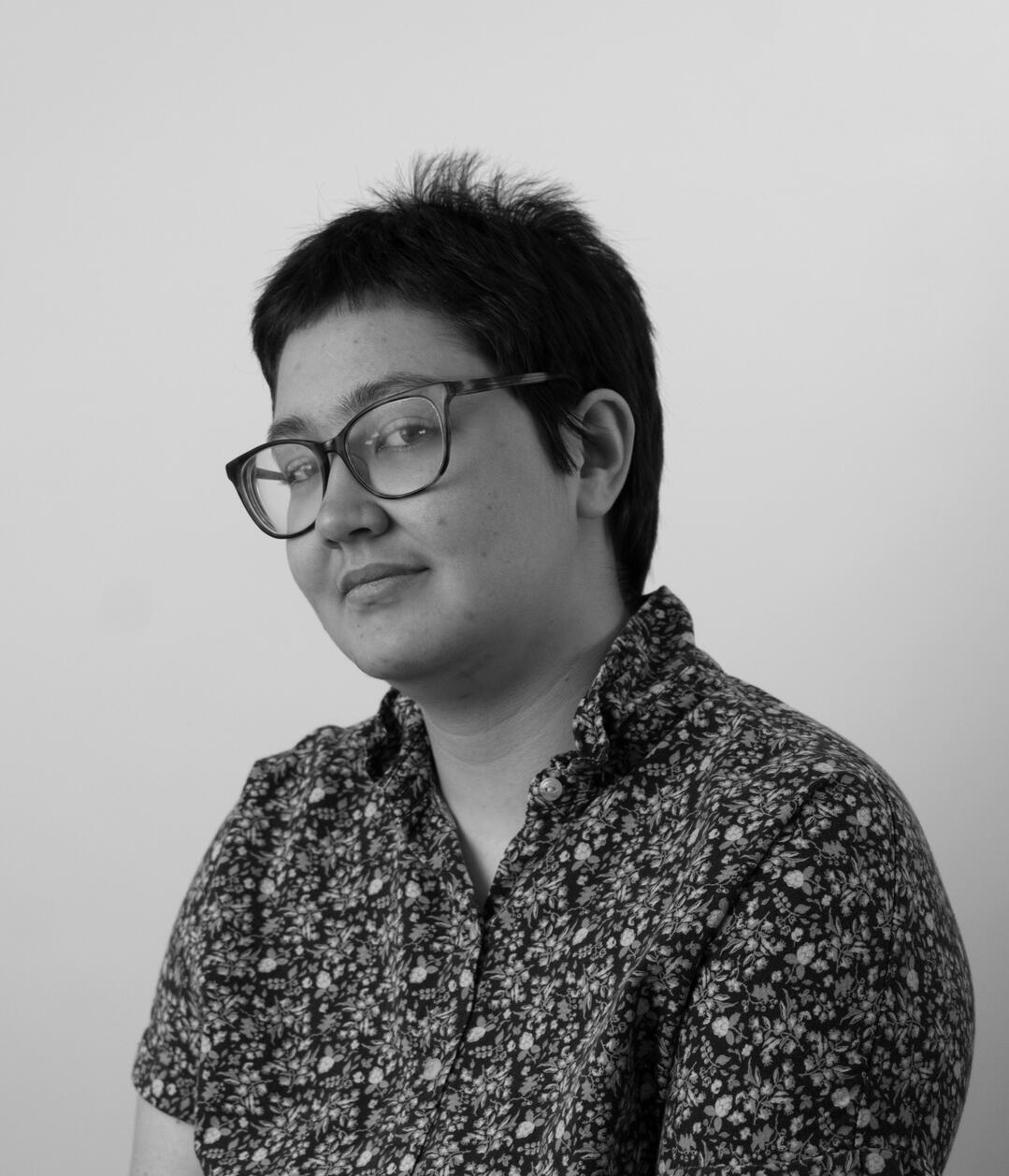

I'm Jordan Finamore, but you already knew that. You can usually find me in Philadelphia pointing out improper kerning to annoy my friends. I'm drawn to physical craft and hands-on materials in my design process, and I make a particular effort to look for unique perspectives when I work.Design is not only a passion to me—it’s a philosophy, a part of my lifestyle, and an always-evolving perspective. I’ve been experimenting with digital design for over a decade and working for clients since high school, but making art has been essential to my livelihood ever since I could hold a crayon; I create to process my environment, express my thoughts, share what I feel, and preserve memories I treasure. The majority of my inspiration comes from a background in choral and orchestral ensemble settings, seeking comfort in the mundane and the everyday, or the drive to live authentically as an out and proud transgender person.Keeping my sense of curiosity is unfathomably important to me. I never outgrew my childhood love of exploration, so I make my way through the world with an open mind; every day gives us an opportunity to learn something new. Though we’re only human, I believe that we make our best work when we try something we think we’re not capable of—as long as we take care of our health and let our shortcomings keep us humble.
I look forward to showing you what I’ve learned so far.
Let’s continue to grow in the future.

2D animation
GIFs with hand-drawn
traditional and digital frames.
illustration
Drawn in Photoshop with a Wacom Intuos Pro tablet.
motion design
Short-form keyframe work in After Effects and Premiere Pro.
merch production
Manufacturer mockups and pieces with distinct silhouettes.
photography
Shot with iPhone + Canon EOS 50D, edited in Photoshop.
printmaking
Linoleum block prints and screen-printed pieces.
figure drawing
Observational anatomy and fashion studies from live models.
daily sketching
Selected pages and spreads
from my personal sketchbooks.

remembrance
Printed booklet with customized excerpts from Rainer Maria Rilke's "Letters To a Young Poet".
Ensemble arts
Branded program and print
collateral for a hypothetical
2024 concert season.
splatfest 500
Fully-interactive prototype site
for concert tour information
and ticket reservations.
drexel wyrmwind
Two logo designs for a pair
of competitive esports teams
at Drexel University.

OBI: Tie Your Kimono Outfit Together
Designed and printed in 2025
overview
"It takes more than a single garment to compose a traditional Japanese kimono ensemble; the design and structure of the obi belt is just as important as the kimono itself."
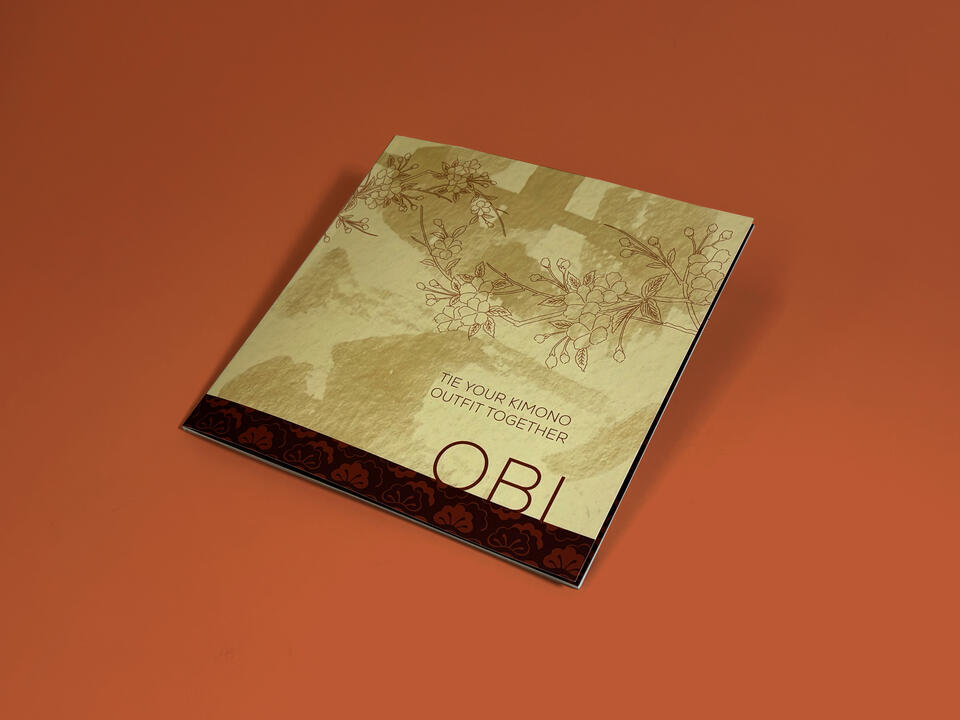
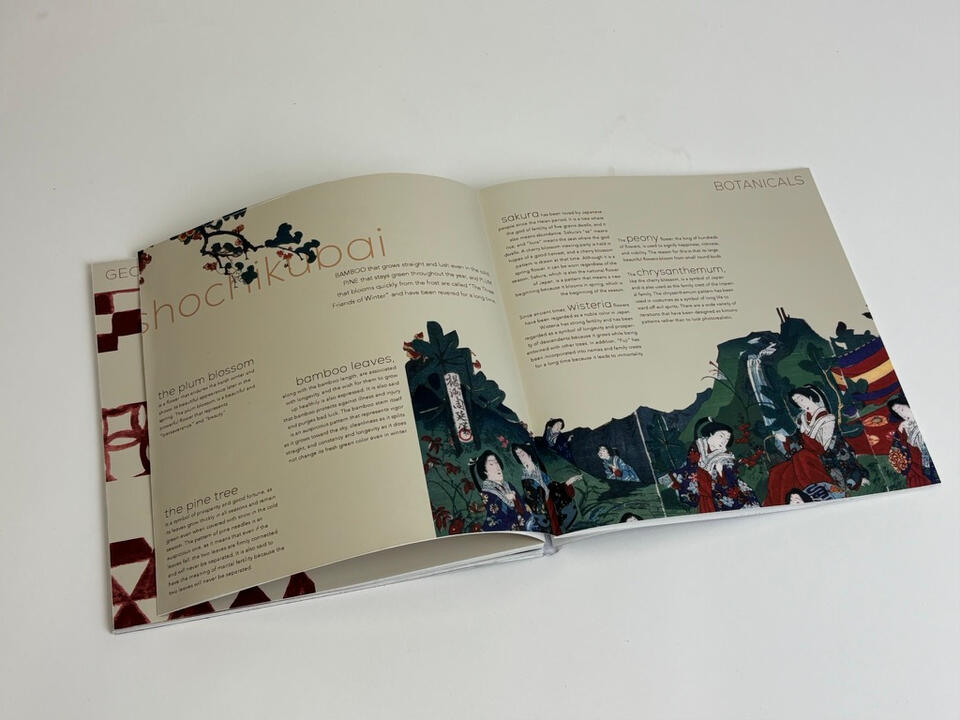
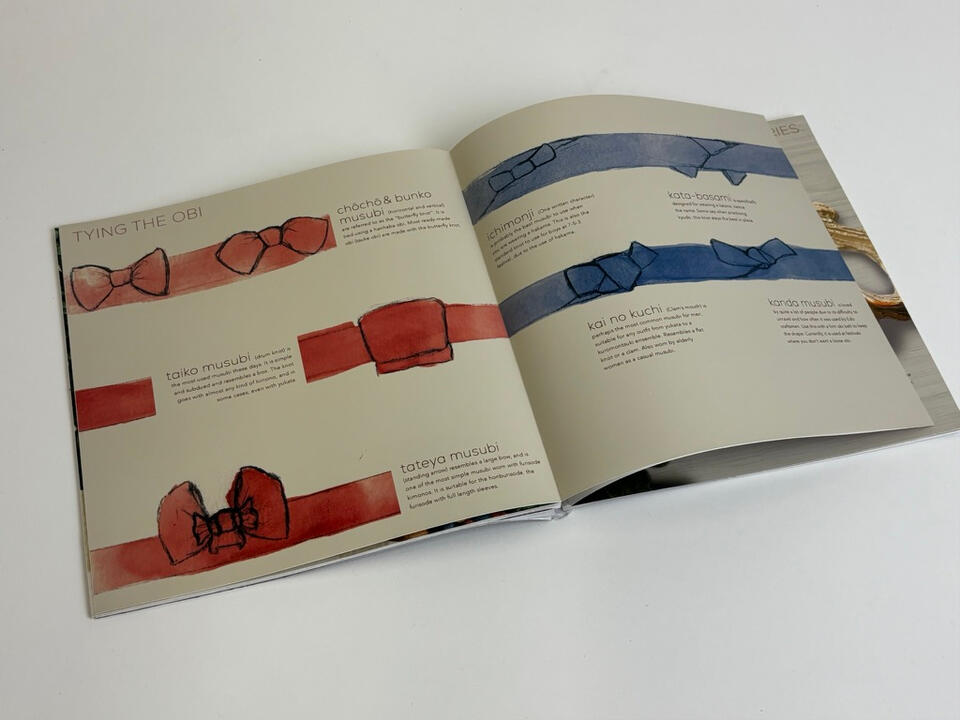
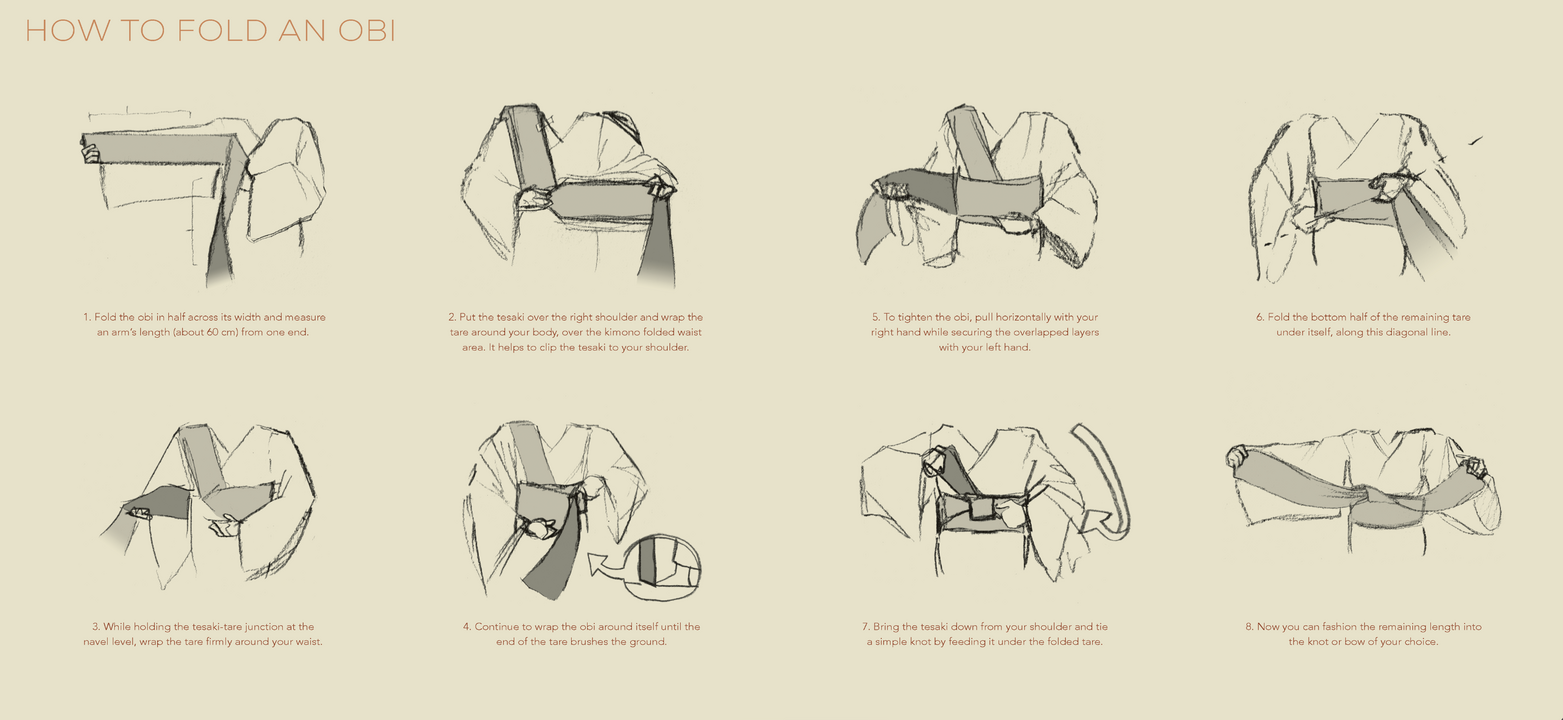
This is my most ambitious solo project to date: a square coffee-table book with a short summary of kimono history, depictions of various obi belts and kimono accessories, and detailed information on the dyeing processes and symbolism of the materials used. From ideation to production, this project took me eleven weeks to finish. I wrote and/or sourced all the copy text, created the design system from scratch, hand-drew and hand-edited every image, and composed every single page in the book as well as the spine and covers.
Inspiration + process
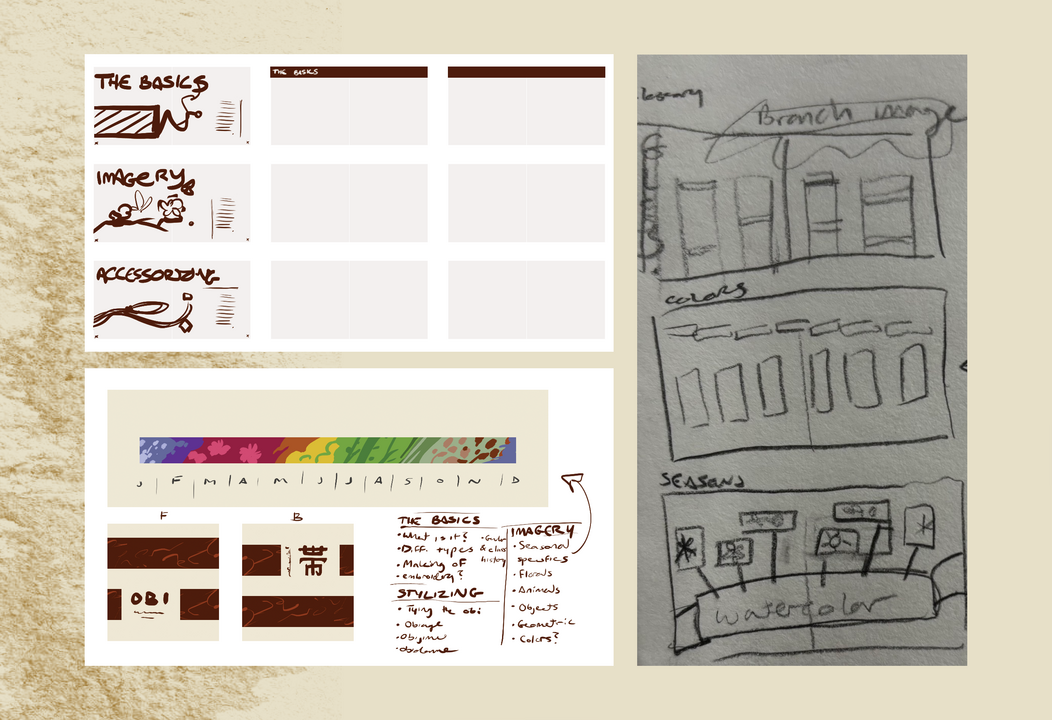
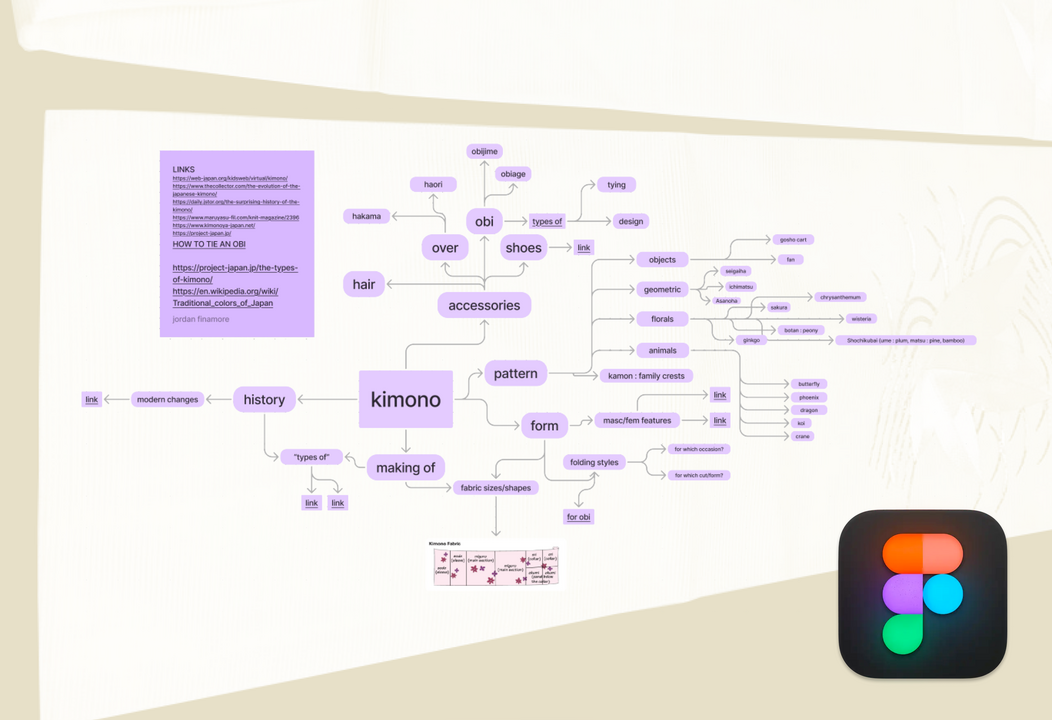
I knew early on that I wanted to explore the world of kimono fashion in this project; however, that theme alone was too broad of a mission to follow in its entirety. I landed on "kimono accessories" as a central theme by creating flowcharts in Figma, connecting various aspects of this broad topic to each other.
Once I had a coherent theme, it soon became a challenge to organize my information effectively. At first, I was anxious to move past the organization phase and jump right into the design of the pages themselves, but it was important to me that I didn't just fill the book with Lorem Ipsums and placeholders. I didn't just want to finish a complex design project—I wanted to deliver a product with a practical use.
assets
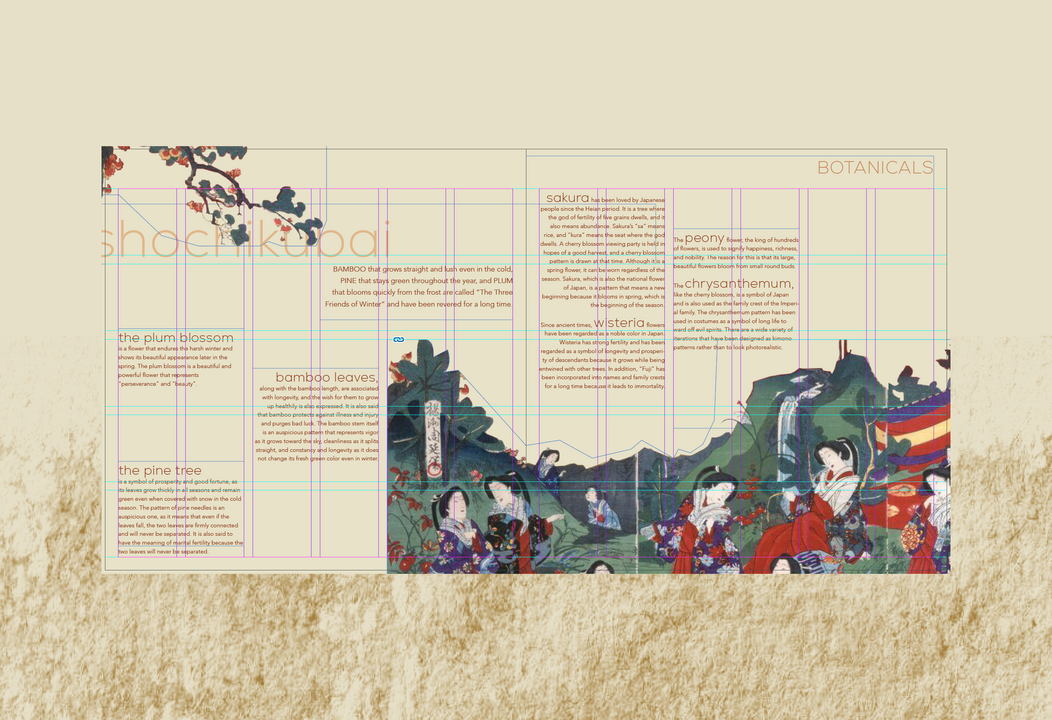
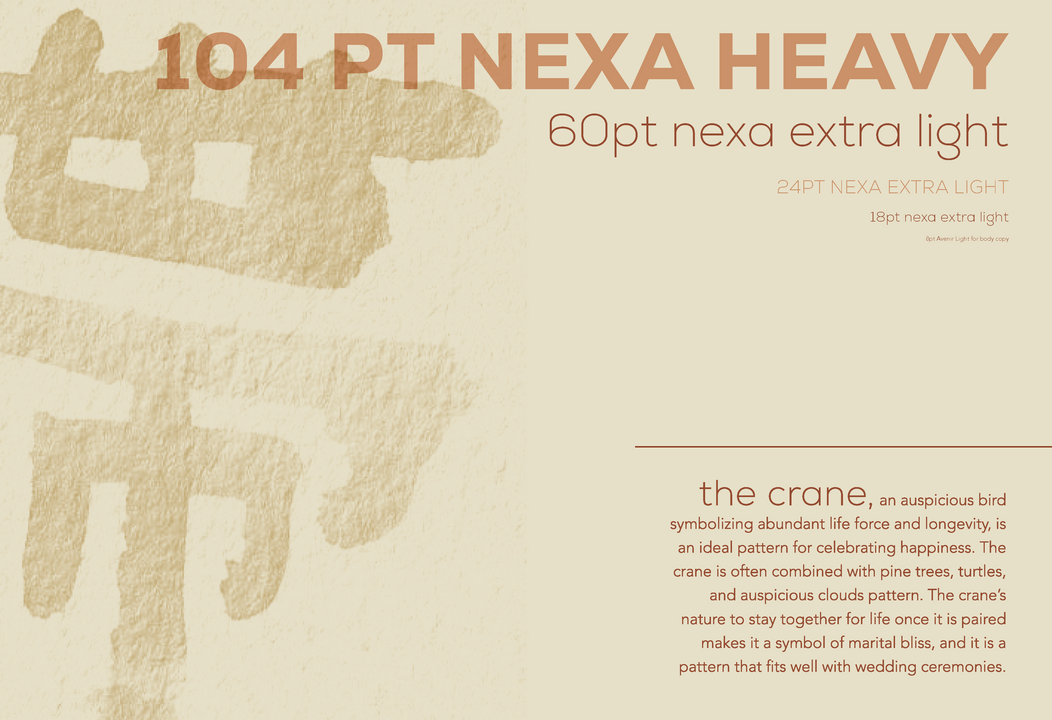
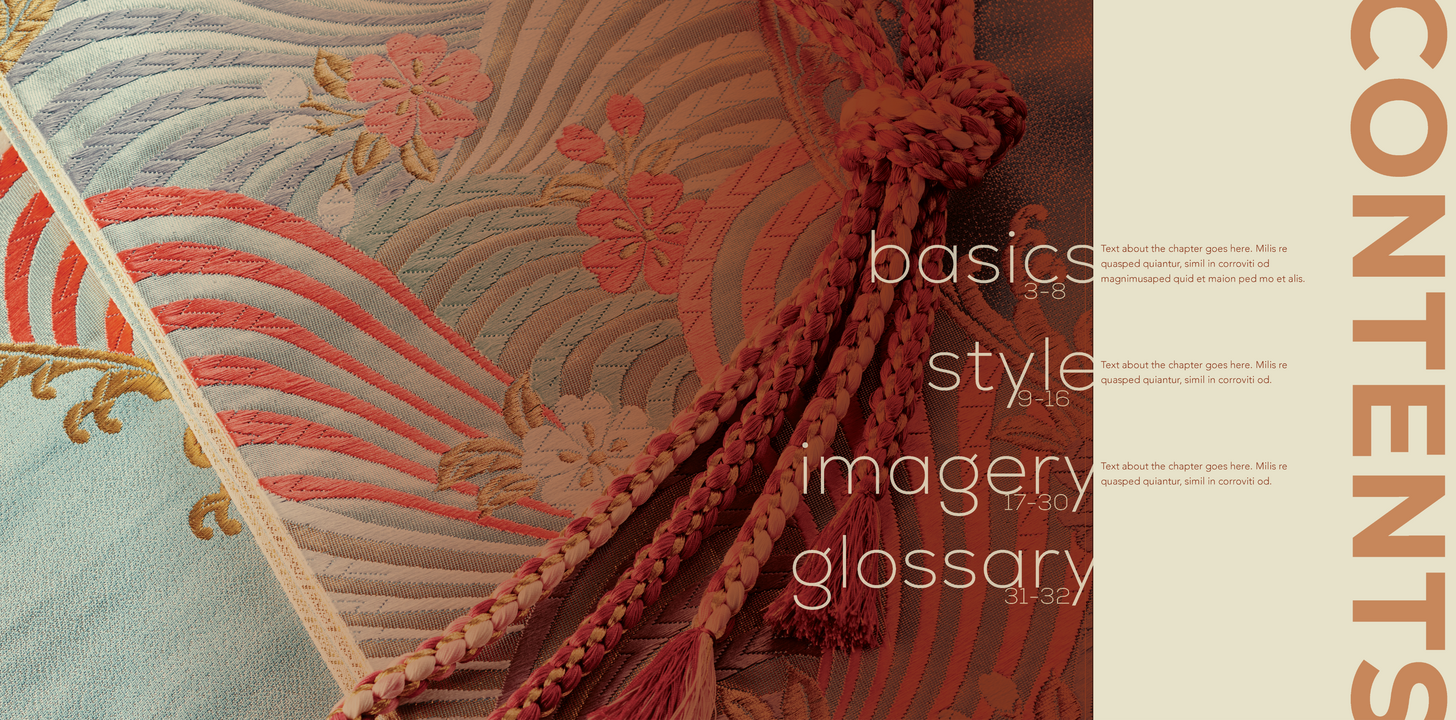
The grid system in Obi utilizes six columns per page. The five-row format of the grid acts as more of a guide to encourage comfortable spacing than a set-in-stone rule. The color palette utilized alongside the grid is reminiscent of traditional dye made from Japanese maple leaves.
In terms of type, a single sans-serif typeface (Nexa) is used liberally throughout the entire publication; I found that the versatility of the typeface's light and heavy fonts adequately balanced the various image treatments in the book without creating unwanted visual clutter.
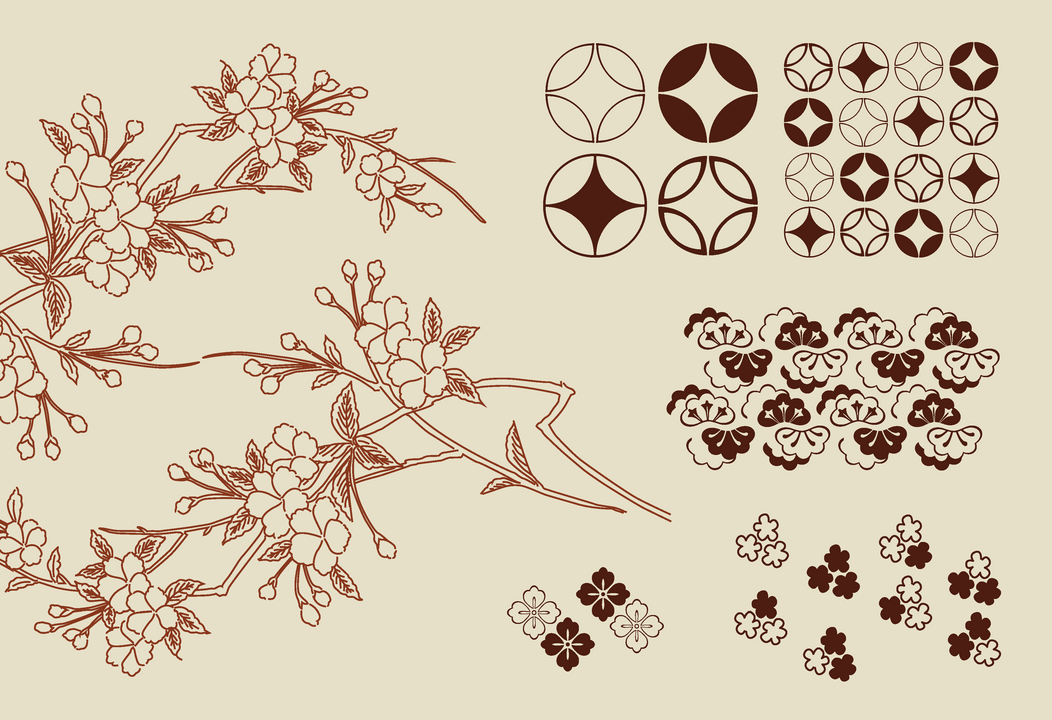
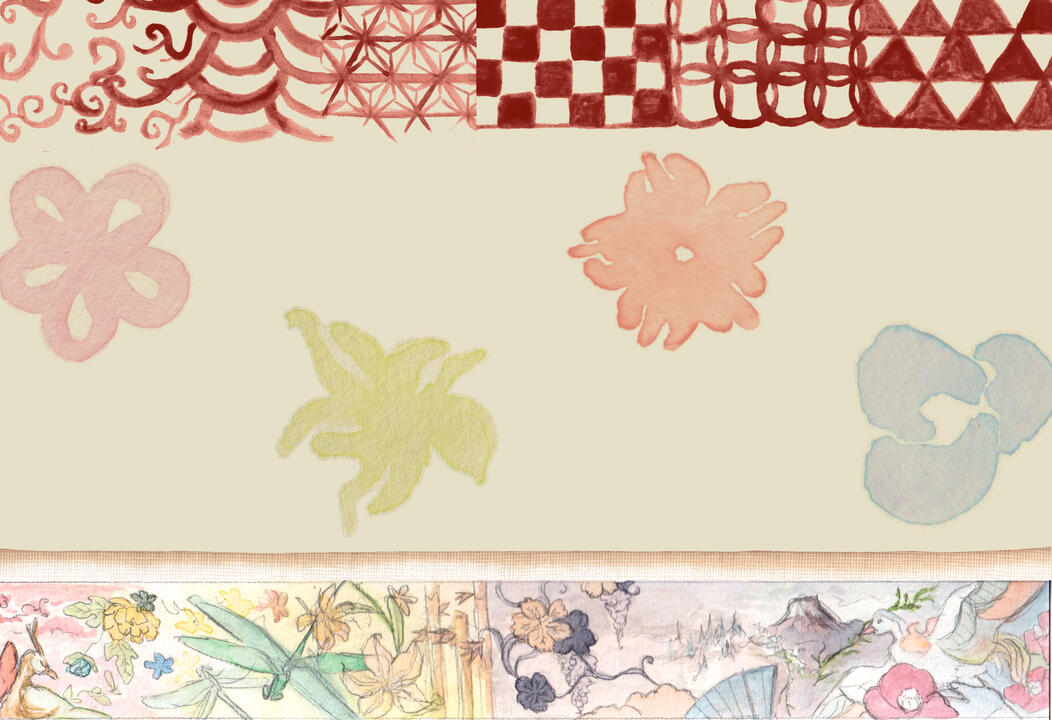
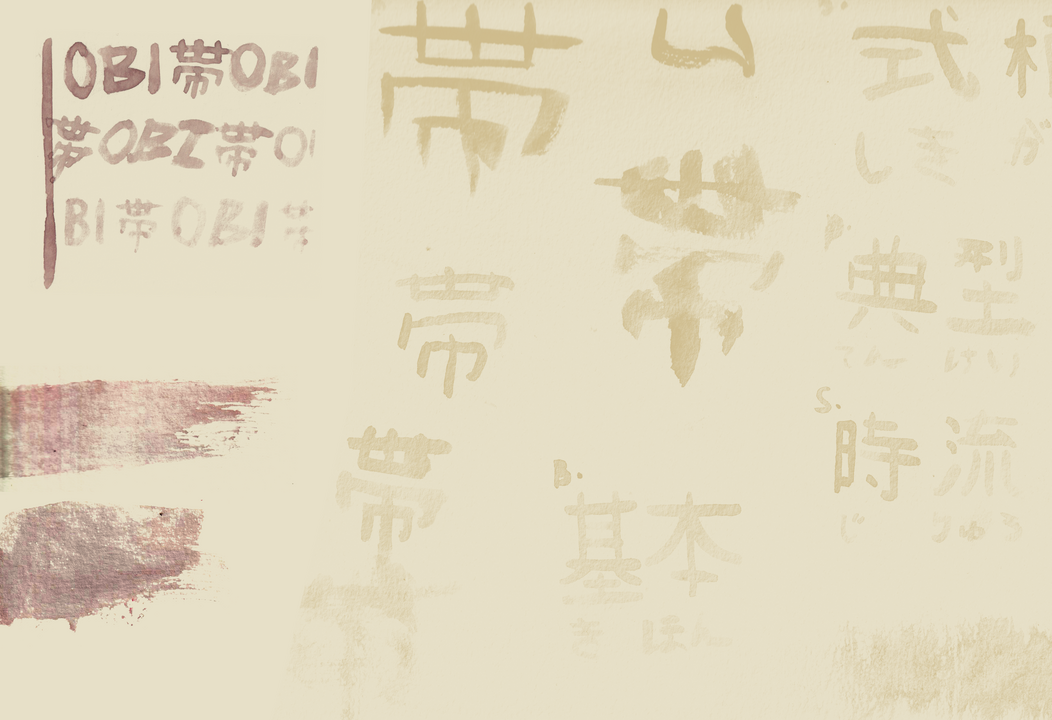
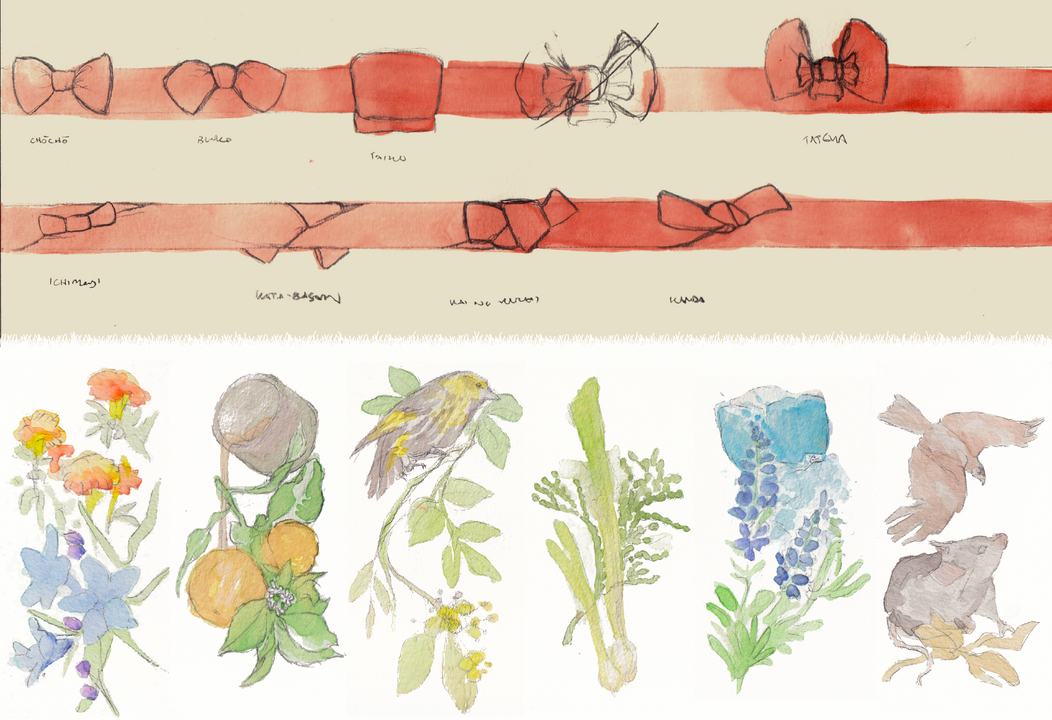
Alongside image retouching and editing in Photoshop, I utilized two different mediums for creating image assets: vector patterns from Illustrator and scanned-in traditional watercolors.
For cleaner background patterns, such as the one featured on the cover, I brought images of traditional kimono patterns into Illustrator and traced over symbols individually. This was the most labor-intensive process of the entire project.
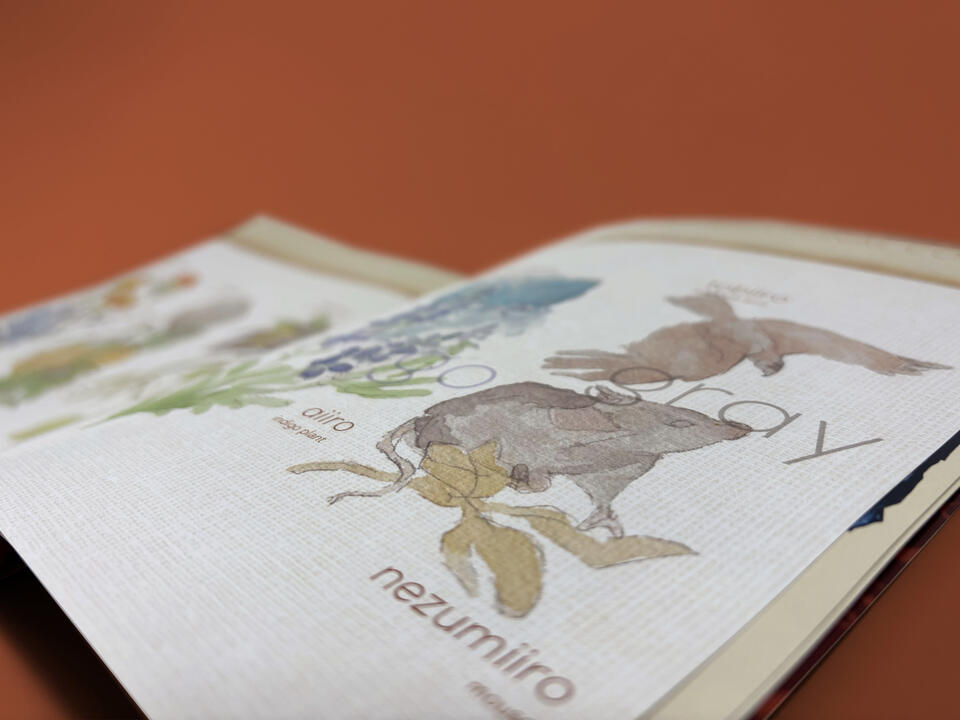
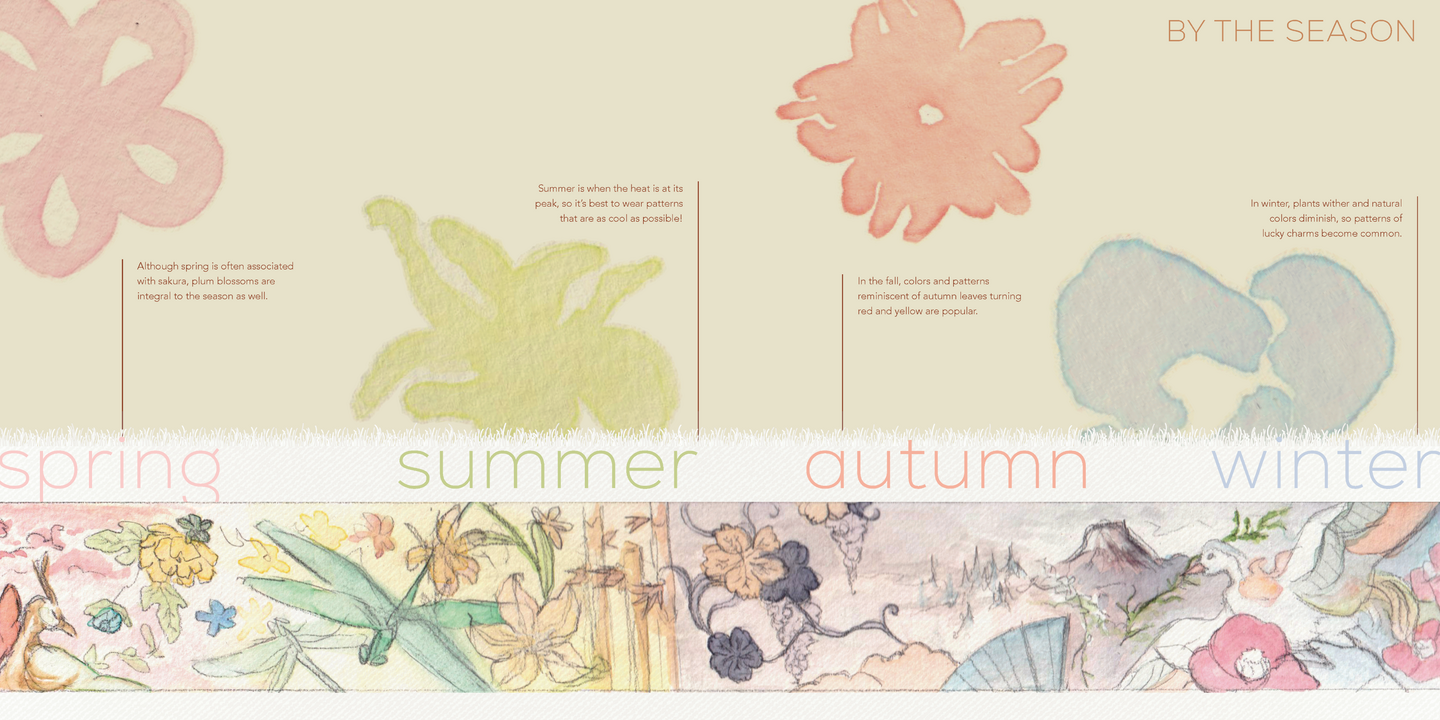
For light visual texture, unique needs, and supplementary images with a handmade feel, I used a set of traditional watercolors on Bristol paper. Some of the assets were sketched in pencil and then painted over.
Results
The finished product is a 8" square book with a 0.25" spine and 36 pages of work.
PDF available upon request.
Enterprise Learning Technology
six-month coop position at septa, 2023-2024
overview
It was my pleasure to work in the Southeastern Pennsylvania Transportation Authority’s training department last fall and winter for a six-month co-op experience. From September 2023 to March 2024, I joined a team of five to create digital education modules in the Articulate software suite. These modules are reviewed by the departments at SEPTA that requested the work, then packaged and published for internal use.
During my time at SEPTA, I familiarized myself with software I’d never heard of before, worked comfortably in utilities with which I had minimal experience, and expanded my knowledge in programs I already knew. Overall, my favorite memories involve the people I worked with; our inter-department relationships mimicked those found in contract work, but our close-knit team worked so well together that we stayed in contact after the co-op was over.
client experience
I worked in a team of less than ten people, including our supervisor. We accepted projects by request: a representative from another department at the Authority would contact our team with a project brief, and if it got greenlit, we would treat the representative and the department like an individual client. Each project timeline was different; some were completed within a month of the original request, and some were works-in-progress from the beginning through the end of my contract.
learning modules + assets
I spent the bulk of my time at work creating vector assets in the Adobe Suite; these assets were then used as interactive elements within eLearning modules (or I would create an animation with them to use in a module). I would also create raster imagery from photos depending on the needs of the modules I created.
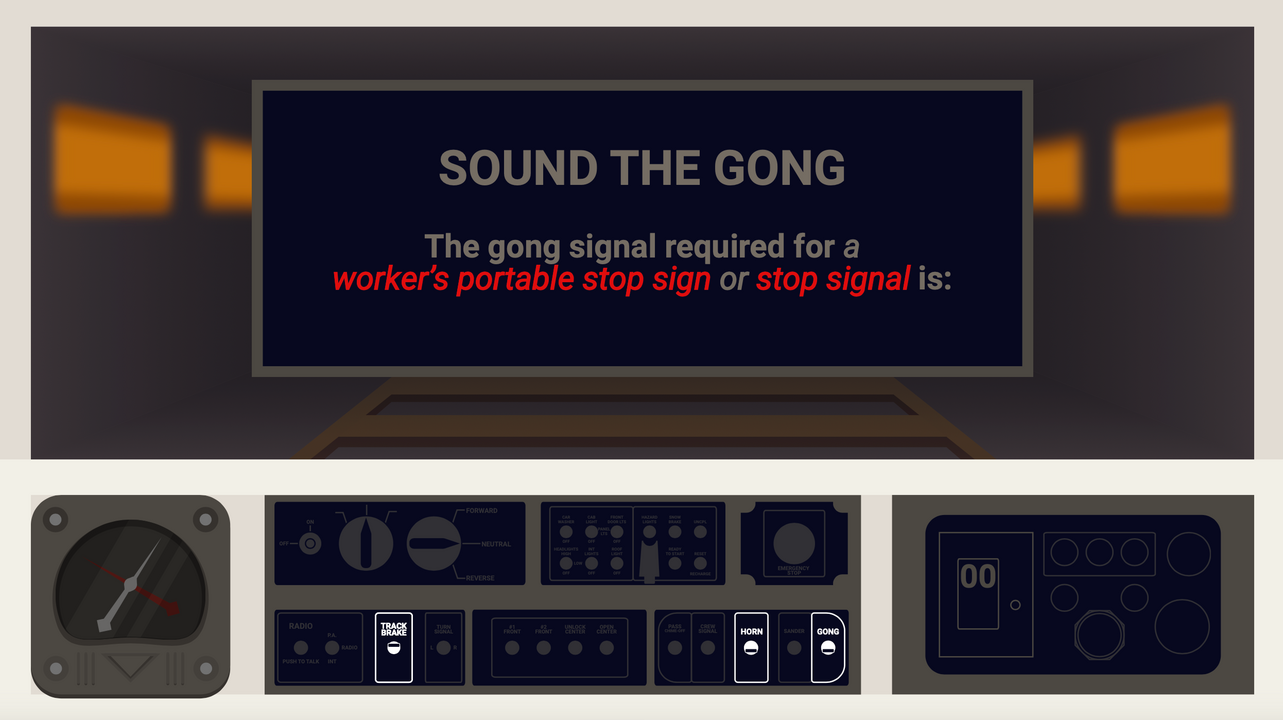
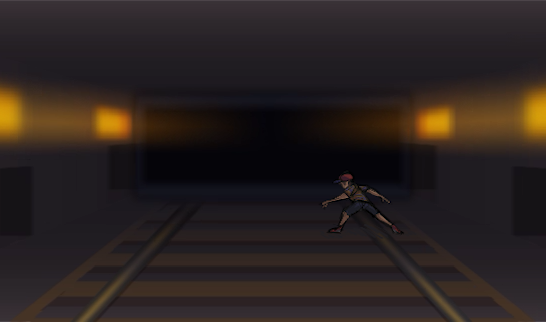
The most ambitious project I worked on during my time at the Authority was a fully-interactive program for remedial "Signal Violation" training. It included three scenarios with seven separate choices total, a moving video background with animated assets, a custom UI that resembled the inside of a trolley, and signage programmed to "move" closer to the user and out of sight.
The entire project was a two-person effort. My coworker Emily Covolesky coded every decision using Articulate Storyline's logic program, and I created all the assets and animations.
videography + post-production
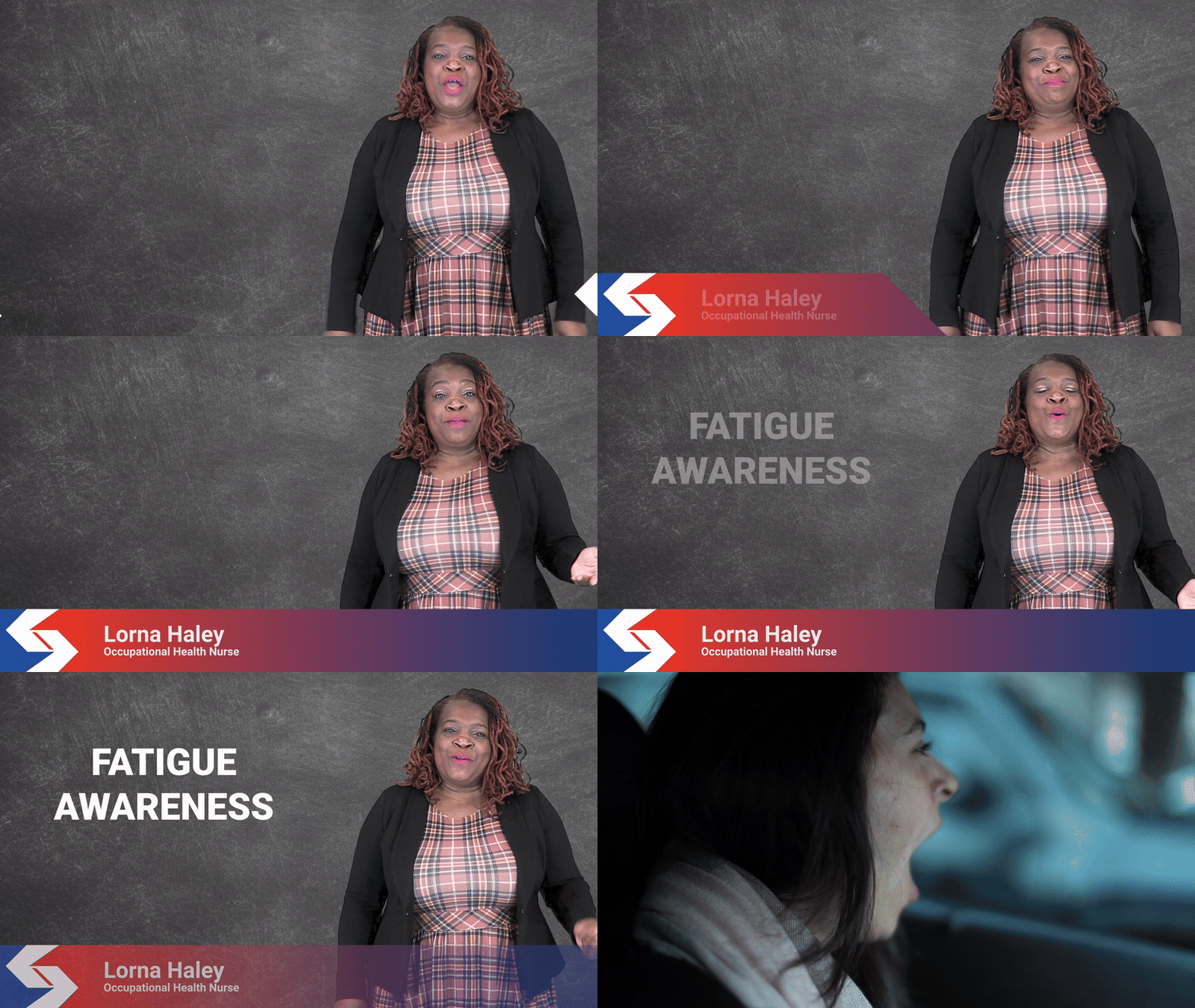
Some of the most fun I had at SEPTA involved green-screen and on-site videography with my teammates, which we would later edit into cohesive video clips used as eLearning sections or promotional material. I got railroad certified during my time on the job so that I could safely navigate the tracks in order to film unique video clips.
The Tileworks of Bucks County
Logo and palette treatment, 2023
overview
The Tileworks of Bucks County prides itself on its rich and storied history, as well as its commitment to the art of tilemaking. With that in mind, I imagined that a hypothetical rebranding of the Tileworks could feature a pictorial logo adapted from one of the factory’s best-selling designs. The finalized logo is depicted here on social media promotions, product packaging, and a variety of business cards, customized for every employee.
client + mission
The Tileworks of Bucks County is a historic tile factory founded by Henry Chapman Mercer in 1912.
It offers tours of the grounds, handmade decorative tiles, and hands-on arts and crafts classes led by ceramics experts.
I had the pleasure of touring the Tileworks myself several years ago, and I vividly remember how passionate the staff were towards preserving the site's history. I knew I wanted to create a branding system that felt rooted in the Tileworks' traditional methods and materials, but still felt fresh for maximum appeal to a rapidly-modernizing world.
process
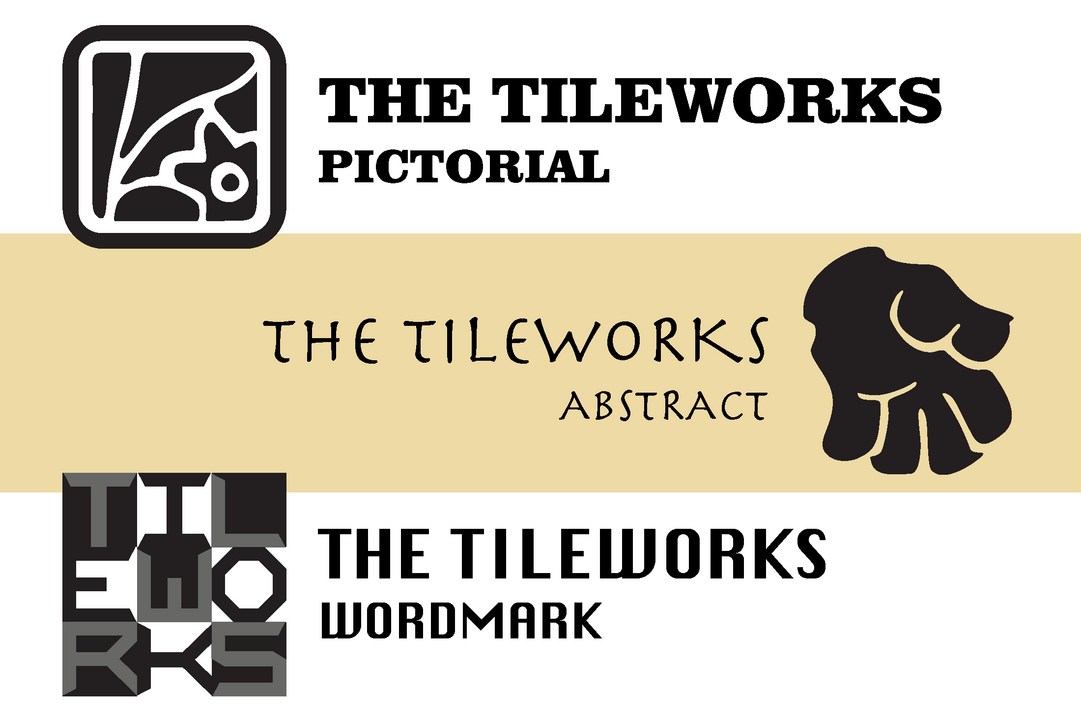
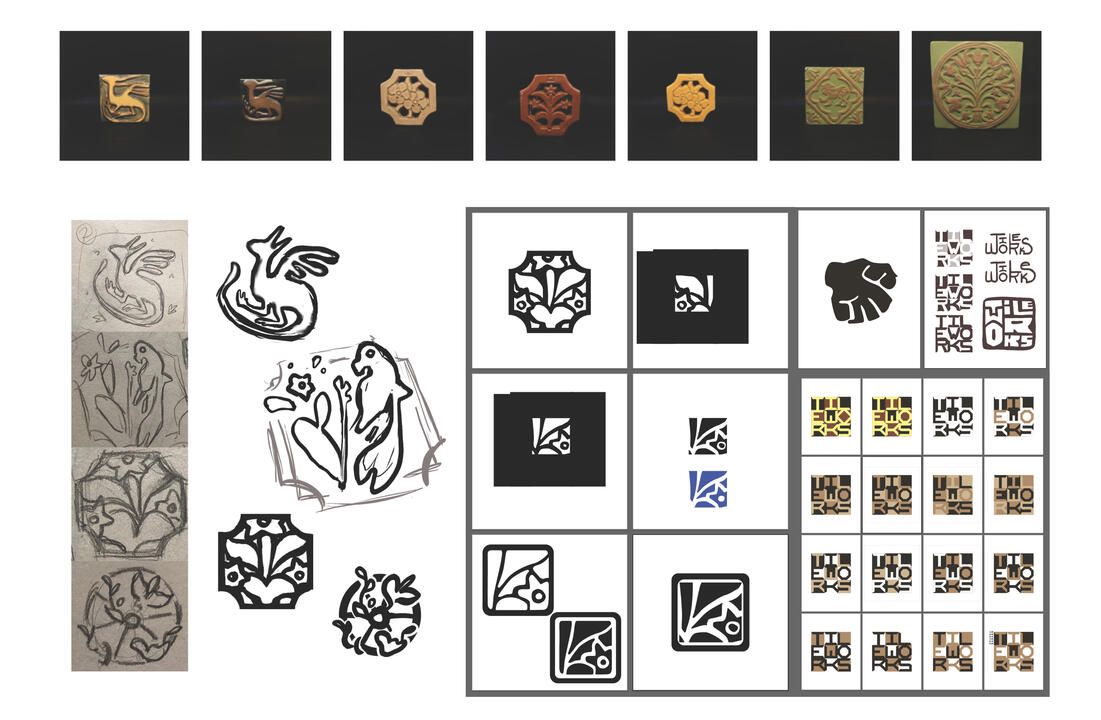
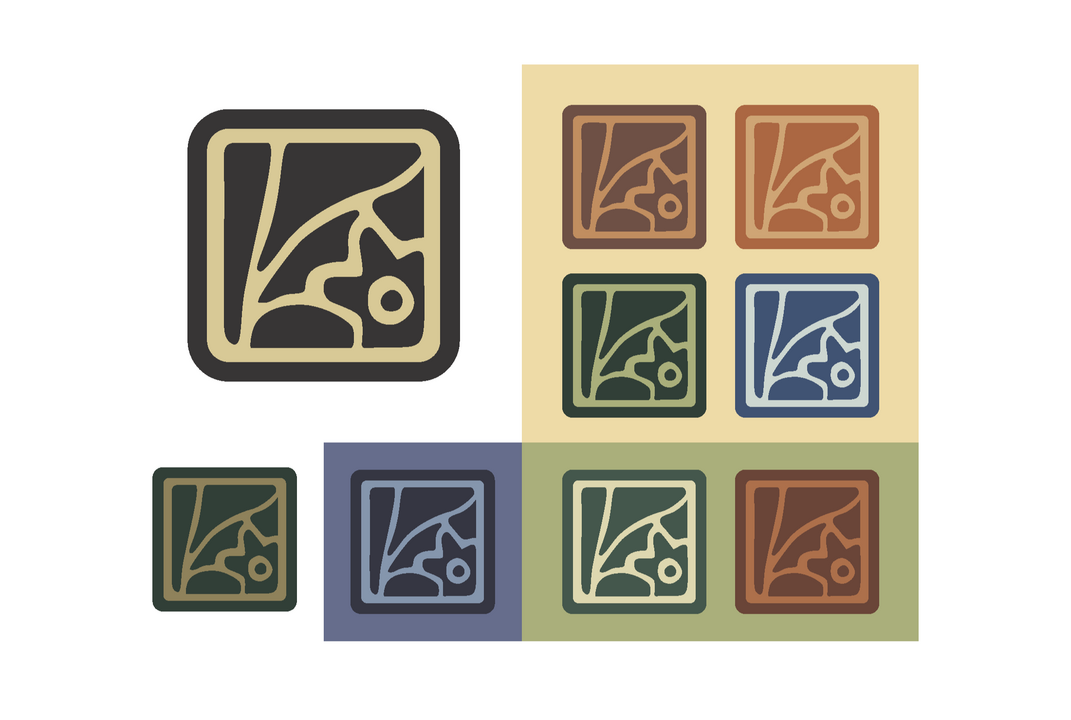
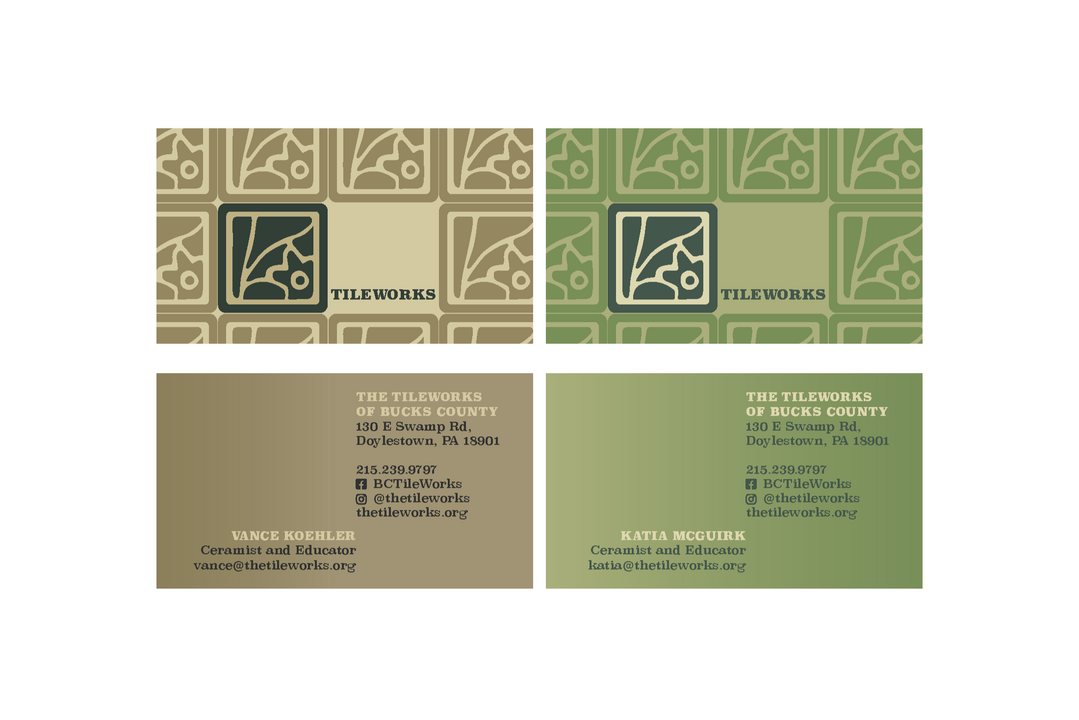
This project was originally an exercise to reimagine an existing company’s logo with a single character, a word treatment, an abstract symbol, and an image.
I ended up pushing my image-based logo the furthest, but I incorporated the Clarendon typeface from one of my word treatment concepts as a secondary branding element.
Results
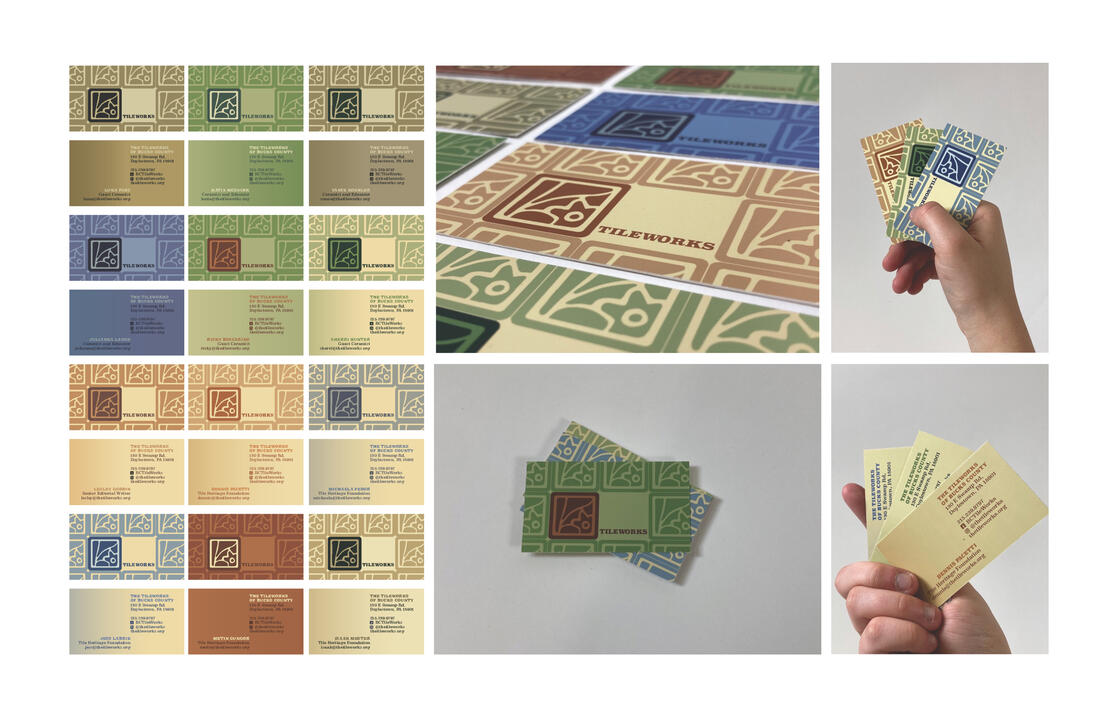

The final deliverables include an animated logo and a LOT of business cards. I wanted every department within the company to have its own unique color treatment without sacrificing overall brand cohesion.
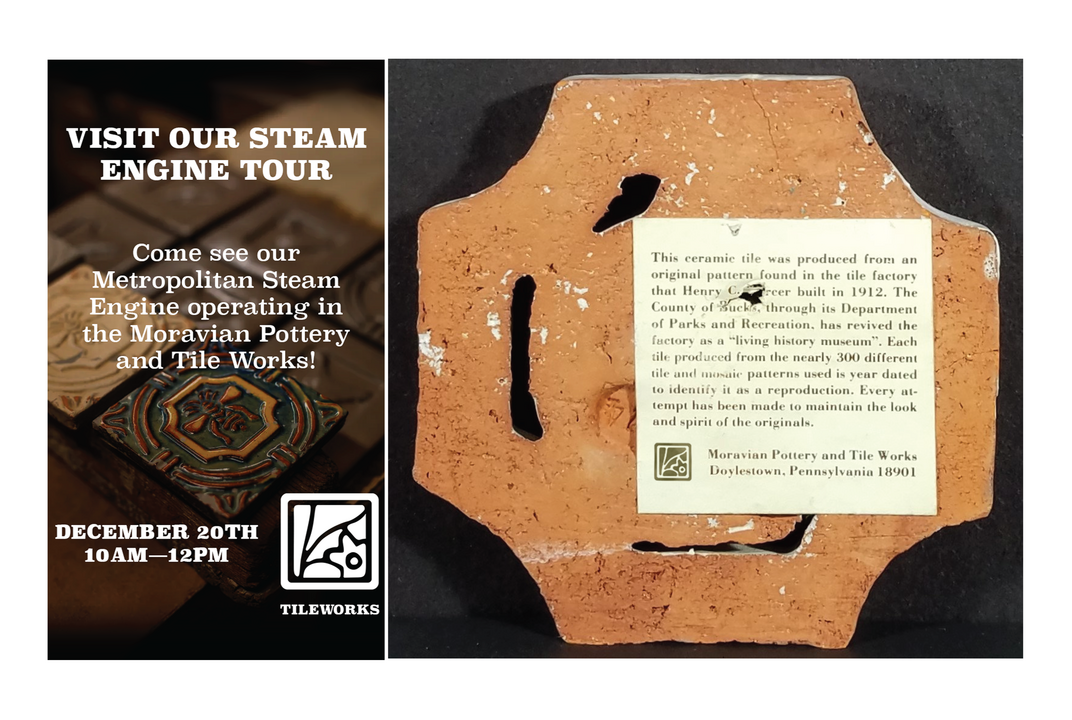
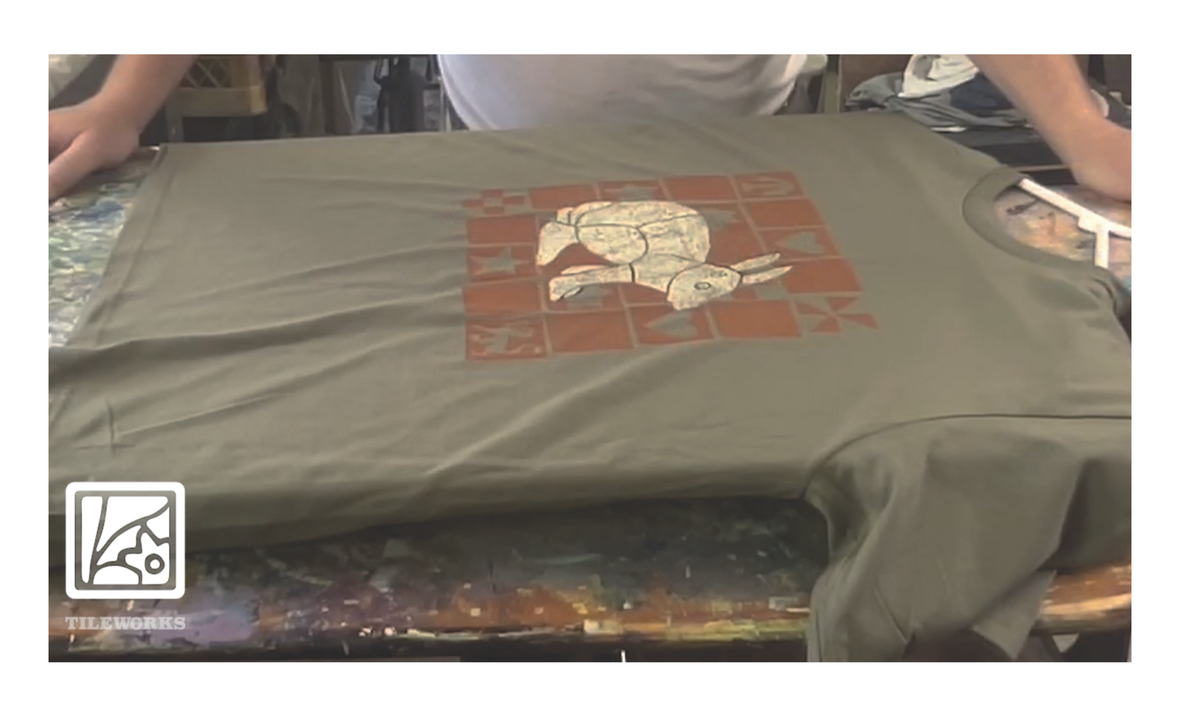
Although the expansive color palette is a major selling point of the brand, I also wanted the animated logo to work well as a silhouette so that it could be reproduced on product labels or social media.
My Little Gamer
Entertainment for the Next Generation, 2024
overview
“Support young health from birth to bosses,” proclaims the latest voice in the infant toy market. My Little Gamer: Entertainment For The Next Generation strives to stand out from other products in the toy aisle with their techwear- inspired graphic packaging and unique toys that promote safe play alongside new, modern interests.
As my design work evolves, I find myself becoming more meticulous with the physical craft involved in projects like these; the branding design was a lovely challenge on its own, but I feel even more satisfied with the end result because I took the product photos and put the box together by hand.
mission / target audience
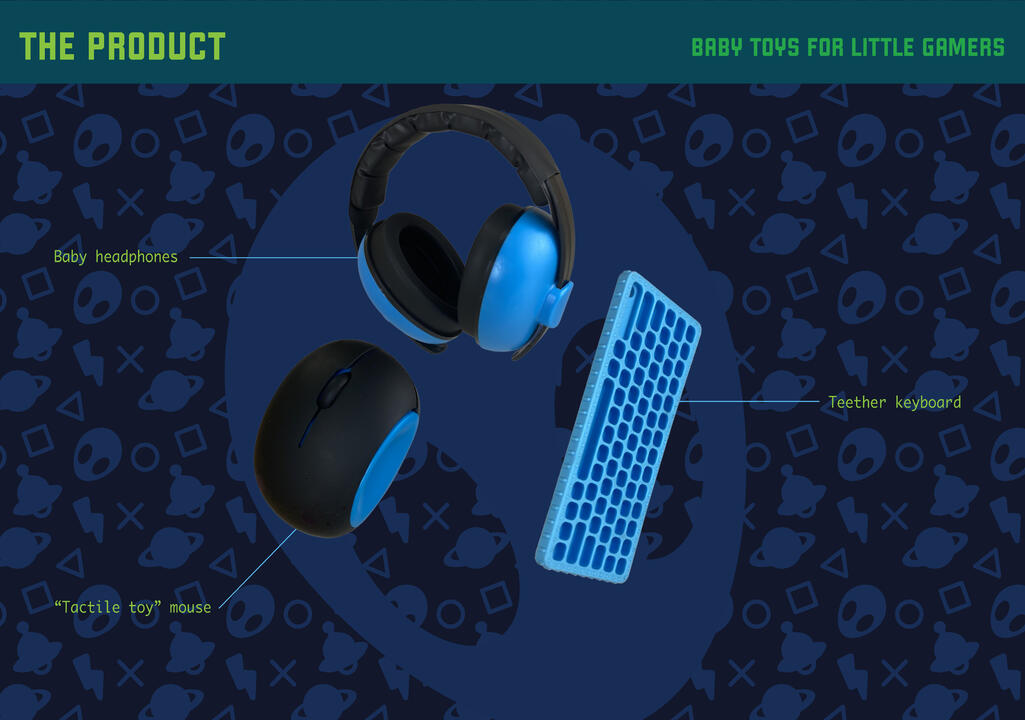
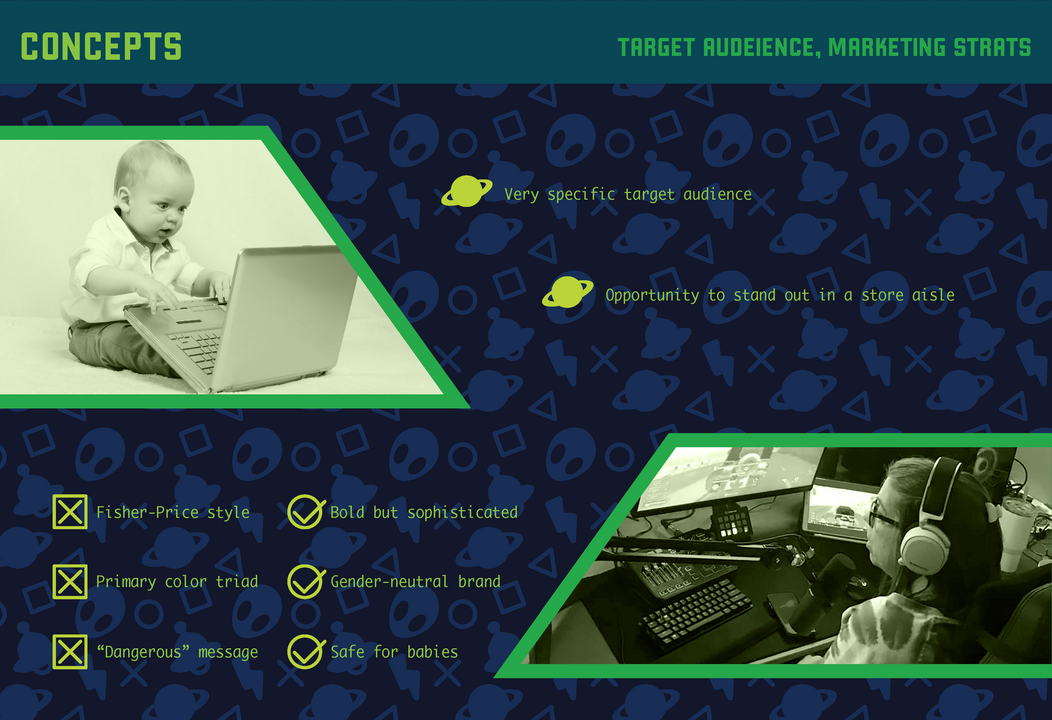
I wanted this project to merge modern-day tech with baby-safe recreation, creating a fresh attitude in the baby toy market. As a result, my intended target audience is relatively slim; I appealed to the overlap of new parents and young adults who considered themselves more in-touch with the digital age than most.
More than anything, I steered away from the traditional "Fisher-Price" look, as well as bright rainbow colors, while keeping the baby's engagement in mind with a cohesive, vibrant color palette. I was also careful to avoid the messages of "danger" often associated with young boys' toys, and sought a gender-neutral look to broaden my target audience.
process
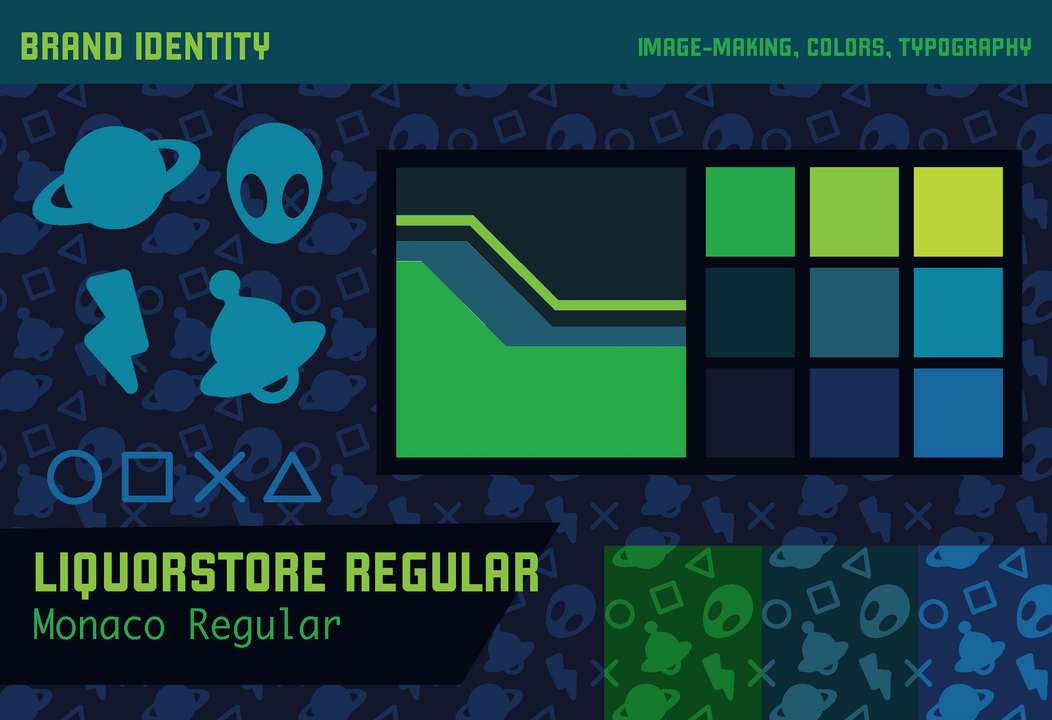
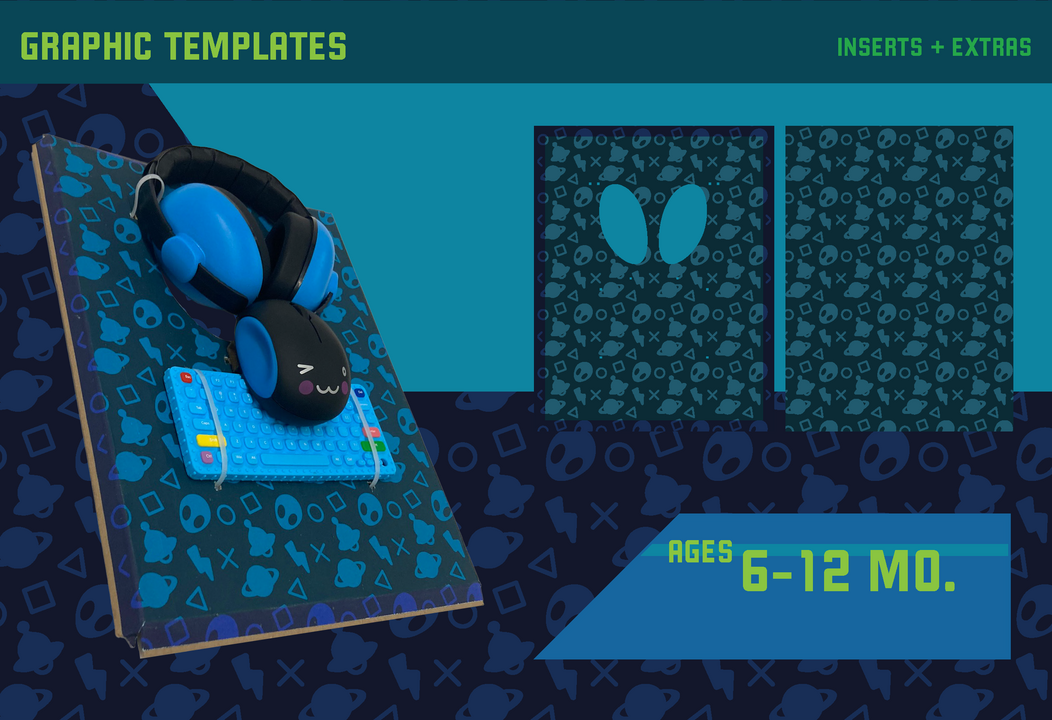
I landed on a cool blue-green color palette with pleasing tones and fake-neon highlights. Using hand-drawn iterations as a base, I used vector assets that mimicked "sci-fi" imagery (and smaller symbols reminiscent of the PlayStation buttons) to create a pattern for the inside of my package. For the outside of the box, I mimicked the design of a gaming PC, complete with fake cooling fans and angular strips that suggested a paneled texture.
Results
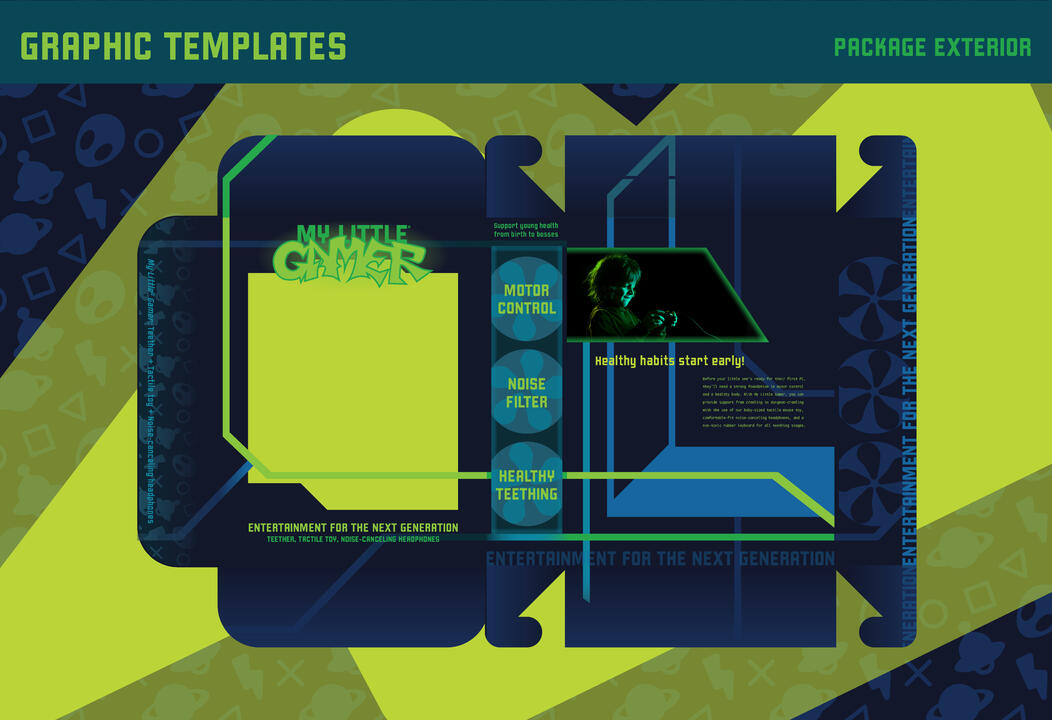
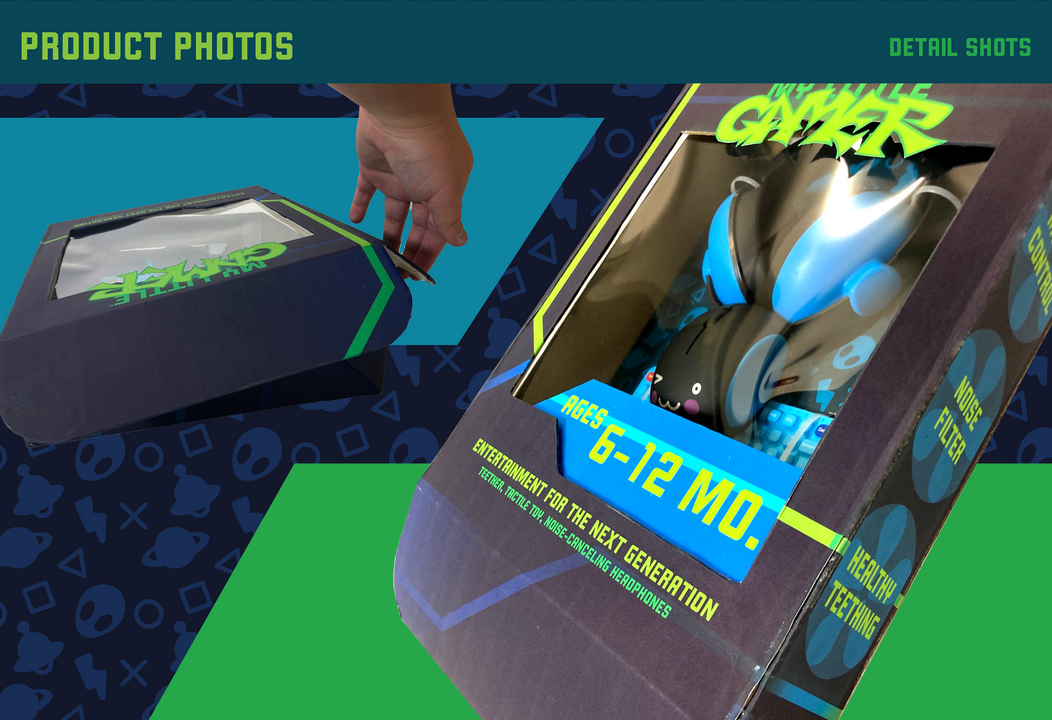
I chose a box design built with a dramatic opening and a quick deconstruction in mind; it's easily folded for storage or recycling. Inside, the plastic window reveals a cardboard decal with the recommended baby age range, and a patterned cardboard insert to which the baby toys are zip-tied.
Sailor Style
portion of a museum exhibit, 2024
overview
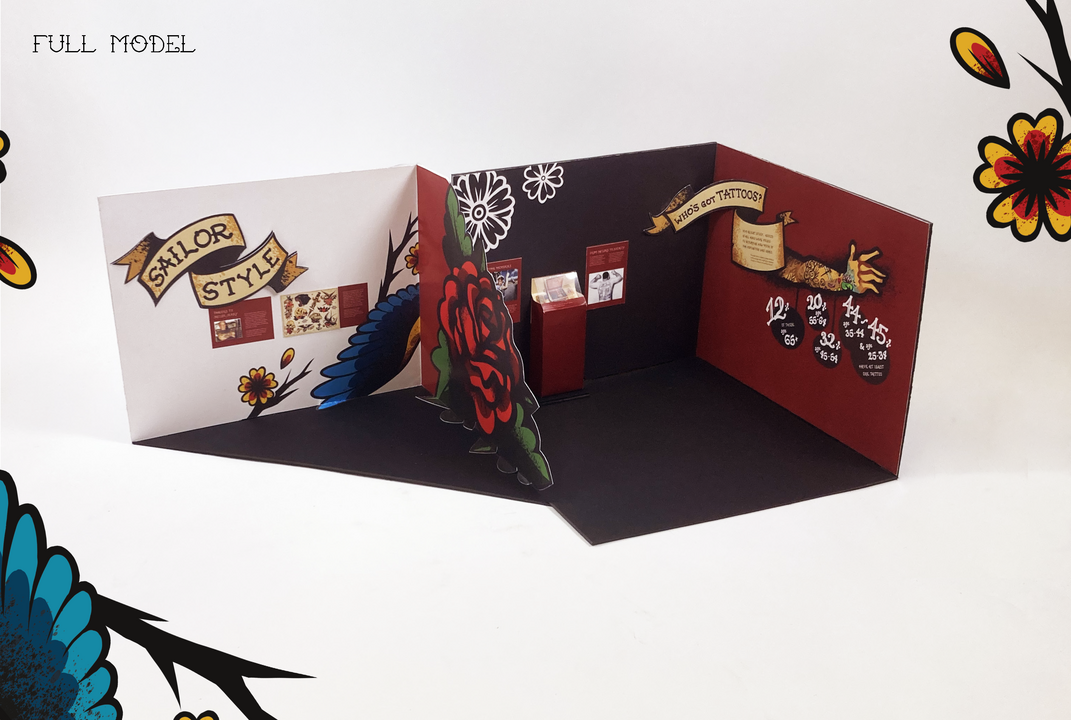
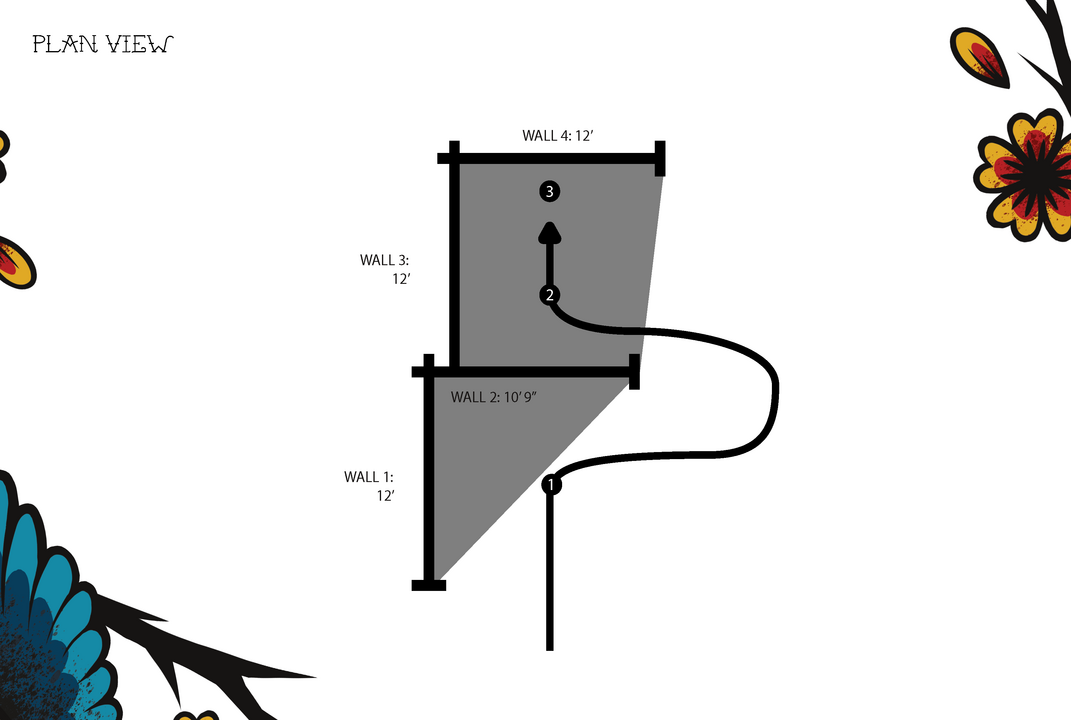
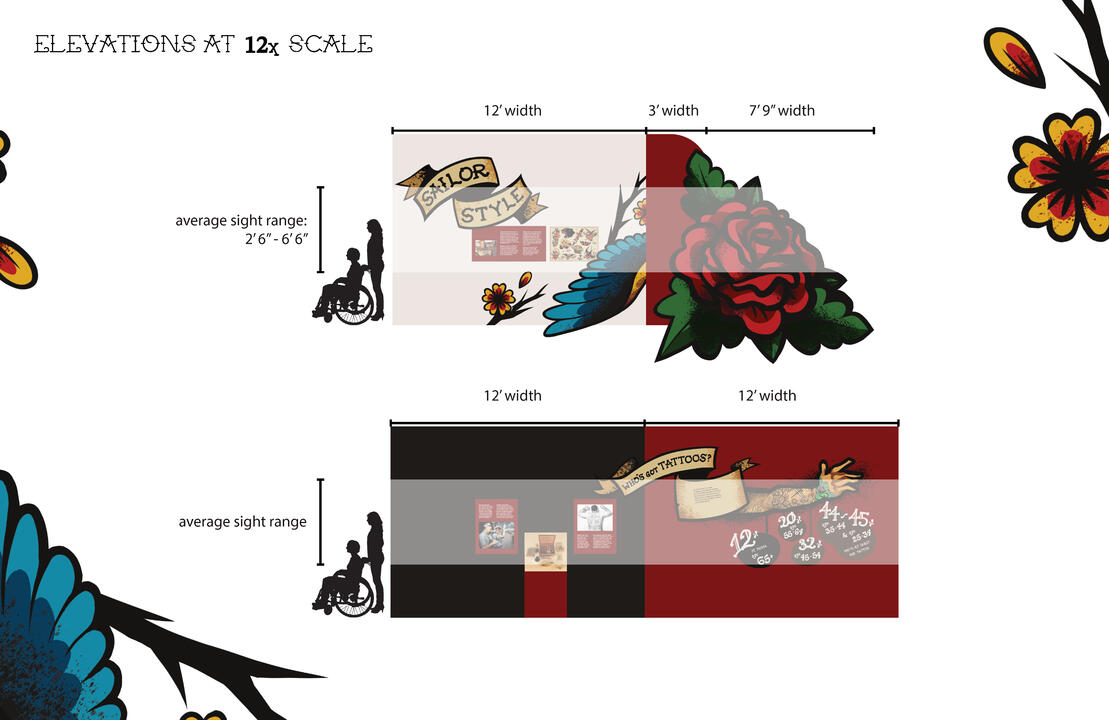
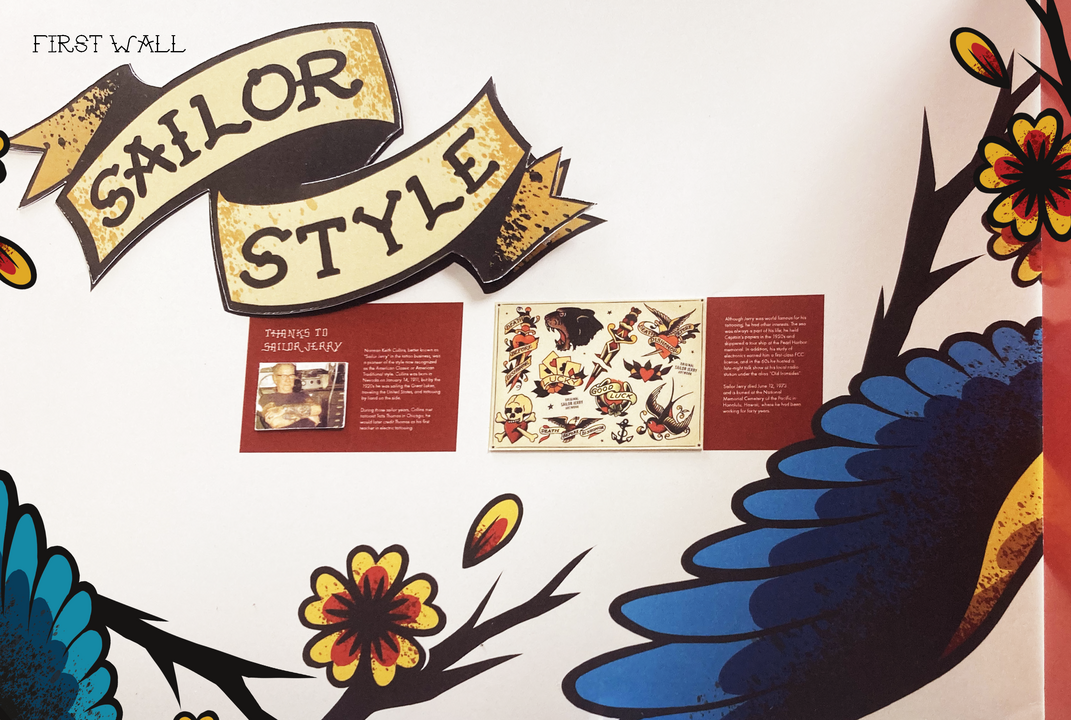
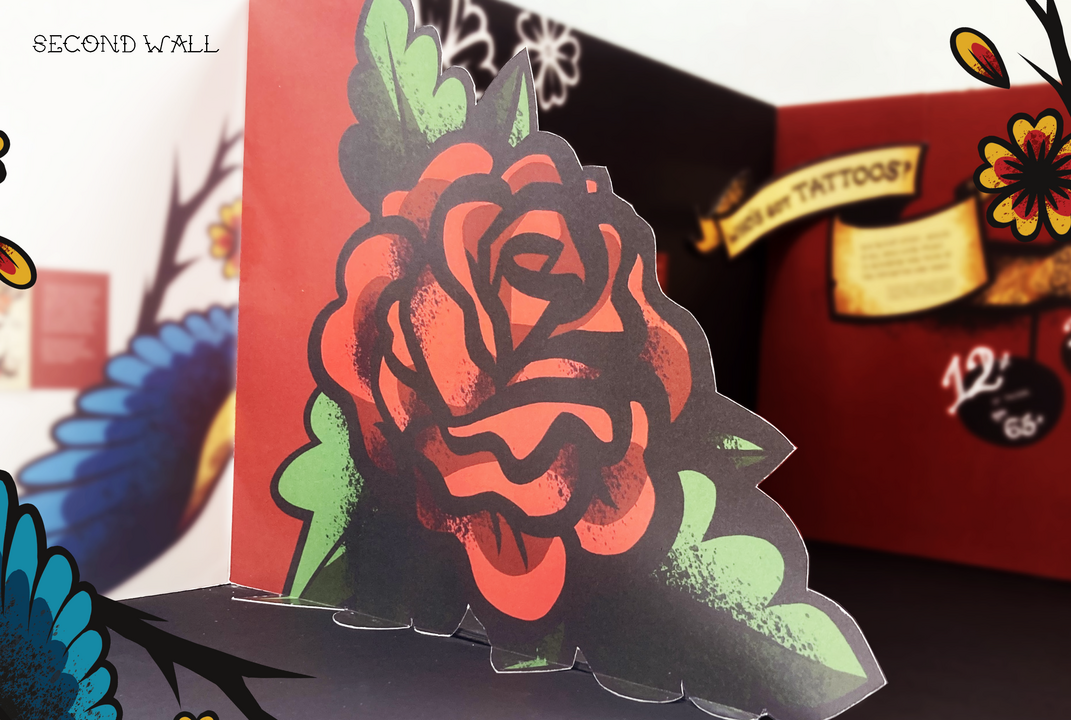
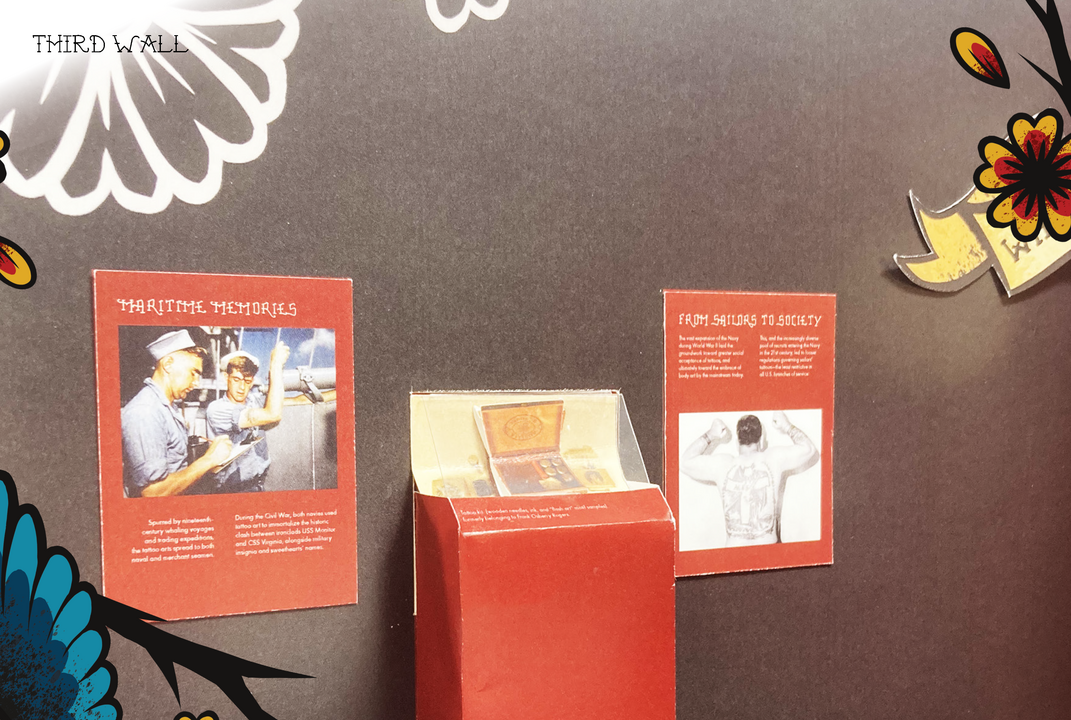
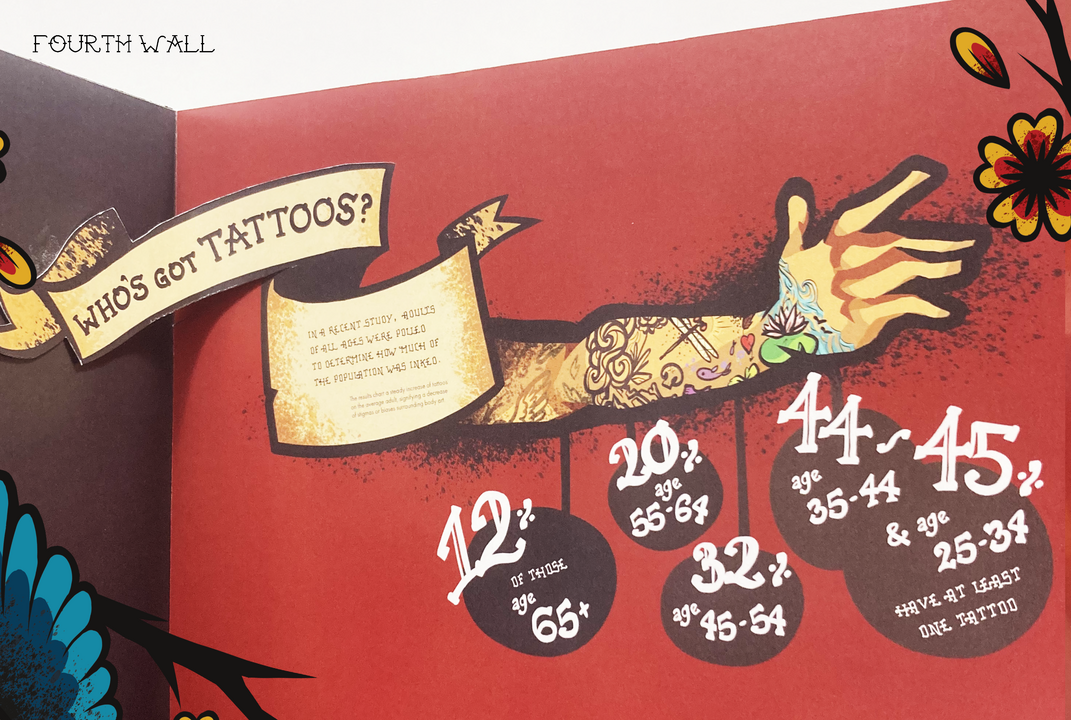
This concept for a museum exhibition follows the history of the American Traditional tattoo style, key elements and figures that led to its popularization, and the stigma of body art over multiple generations of U.S. citizens. Several historic artifacts and images accent the information to provide its audience with an engaging walkthrough experience.
This project was truly a labor of love; I hand-illustrated every visual element in Photoshop, sourced the research, and put together the scaled-down physical model within a timeframe of two weeks.
Elevator pitch + first iterations
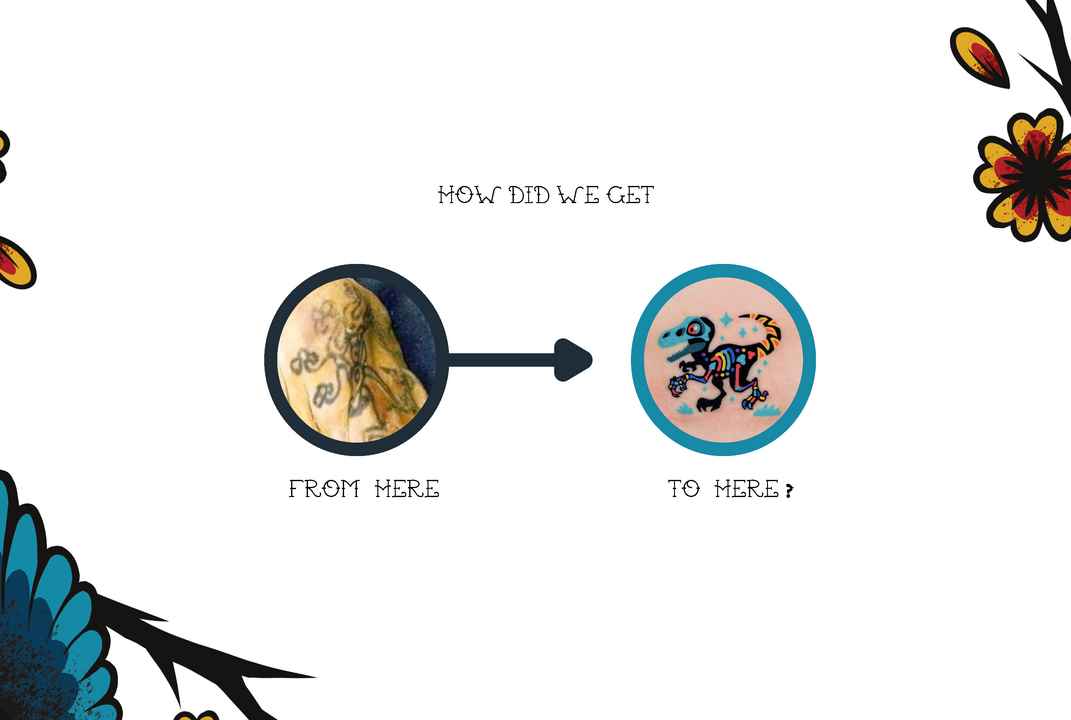
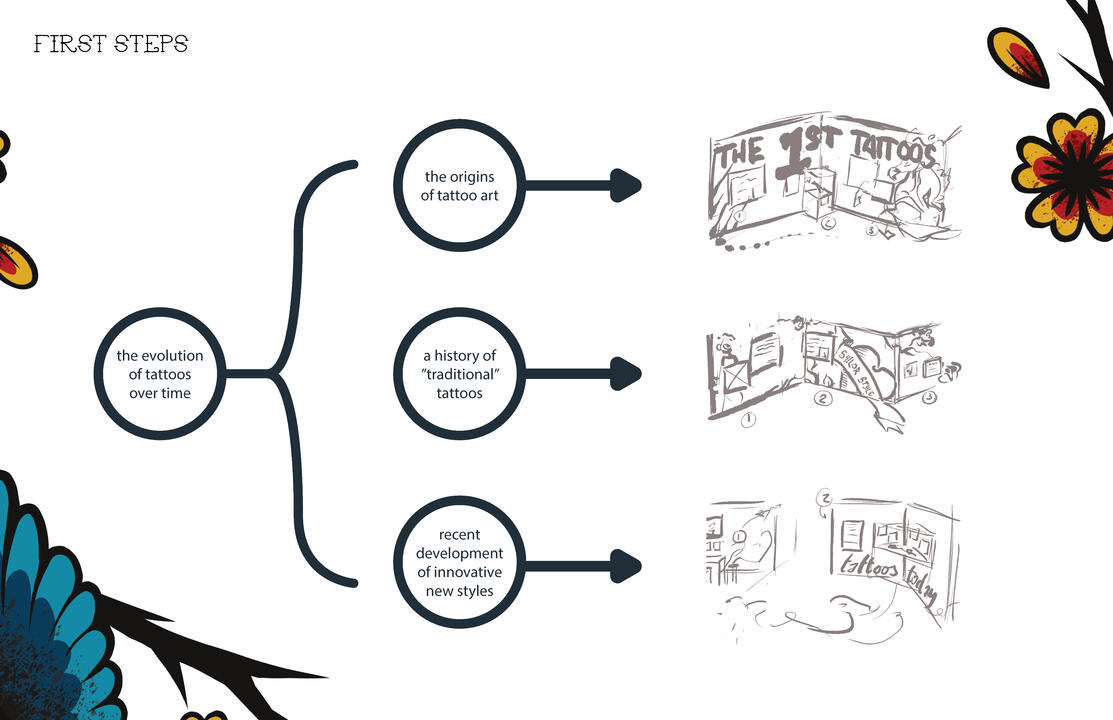
This project began as a much larger concept, and was narrowed down over time as I considered that my end result would be a single three-dimensional model. I'm passionate about tattoo art in all shapes and forms, so I started with multiple room ideas that centered a single theme: the growth of tattoo art from its very first documentation all the way to modern experimental styles of the 21st century.
The first room concerned the origins of tattooing: a biography of Ötzi the Iceman and his mummified tattoos alongside Indigenous tattoo practices such as the Māori tradition of Tā Moko. That room would lead us into a sectioned exhibit about Sailor Jerry and the growth of the American Traditional tattoo style that has become so ingrained in the perception of tattooing in the U.S. today. Then, the last room would have a non-linear exploration of various modern tattoo artists and their unique styles, as well as a showcase of tattoo art mimicking different fine art or craft mediums.
Eventually, the second "room" became the focus of the project; I was the most confident about my ability to source supplementary images and copy text for that particular topic.
process
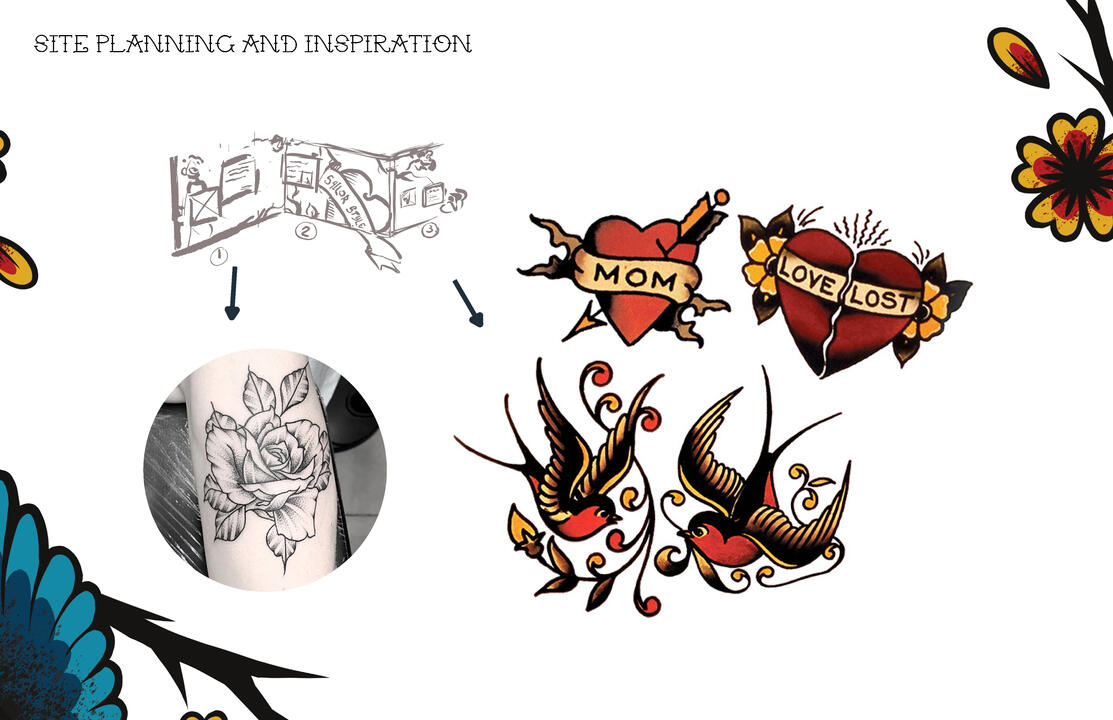
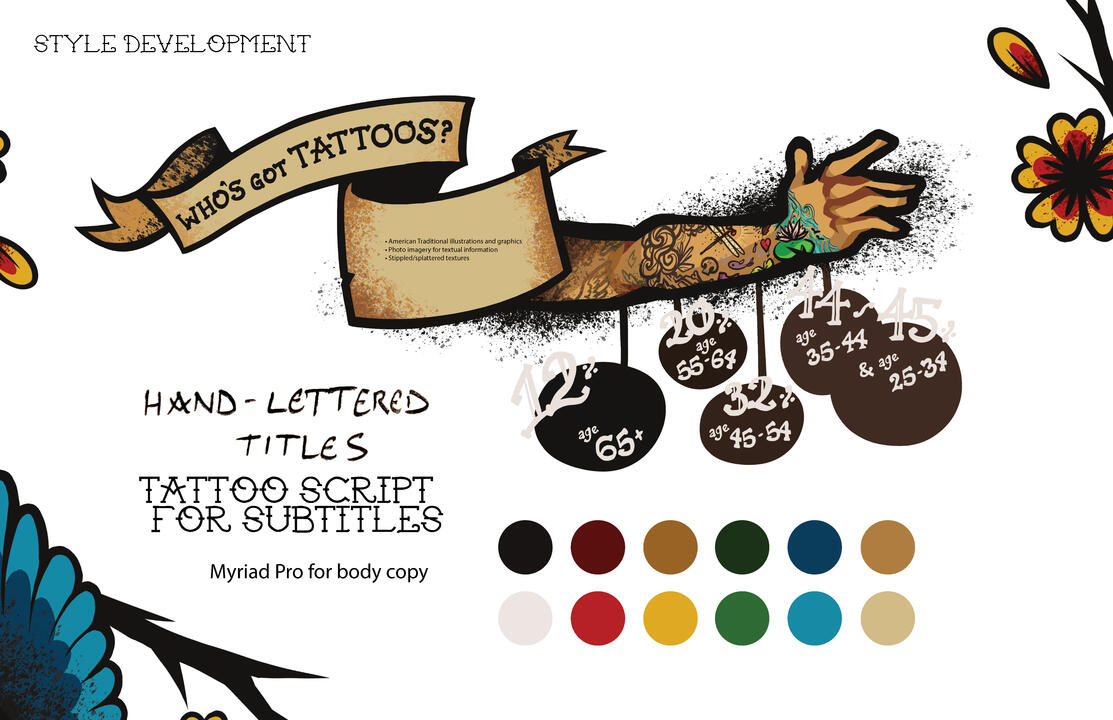
As a result of my iteration, I leaned heavily into the iconic American Traditional style. I felt that while the Tattoo Script typeface I used for subtitles was innovative but legible, it felt too stiff to use as a title font, so I used it as a template when I needed a hand-lettered title.
Using my trusty drawing tablet and Adobe suite, I created a page of visual assets that I could crop and reuse in different areas of the design—as well as an infographic that aligns its numerical data with the visible aging of tattoos on an arm.
Results
My final deliverables included the physical model, assembled from cardstock and foam-core board, as well as a presentation with realistic floorplans and elevations.
Title
Subtitle
overview
Body
client / target audience
Body
process


Body
Results

Body
titles: handwritten?
subtitle font: gaegu caps
Body font is Geologica with proper capitalization. Here's some more text so that this text box spans several lines and I can actually see how it looks in a realistic setting with no widows or orphans.
Ink Purple
Paper White
Tumblr Blue
Twitter Blue
Vine Green
iFunny Yellow
Tuner Brown
Insta Coral